
BLOG
Peptides for Healing — The Complete Guide to Recovery, Tendon Repair, and Injury Treatment in 2026
Whether you are recovering from a torn tendon, managing chronic joint degeneration, navigating the long road back from surgery, or simply trying to understand what the most current research says about accelerating the body’s natural repair processes — peptides for healing have emerged as one of the most compelling and evidence-supported tools available to researchers and clinicians in 2026.
The body’s healing cascade is a marvel of biological engineering — but it has real limitations. Tendons heal slowly because of poor vascularity. Cartilage barely regenerates at all in adults because it lacks both blood supply and adequate stem cell populations. Post-surgical recovery is constrained by the speed of collagen remodeling, nerve regeneration, and inflammatory resolution. Peptides for healing injuries work by communicating directly with the cellular machinery responsible for each of these processes — amplifying, accelerating, and in some cases enabling repair that the body’s baseline response cannot achieve alone.
This comprehensive guide from Peptides Lab covers everything — from the best peptides for healing tendons, joints, and soft tissue to peptides for healing after surgery, peptides for inflammation, peptide injections for healing, and what realistic protocols look like when you approach recovery with the scientific rigor the evidence demands.
What Are Peptides for Healing and Why Are They the Most Exciting Recovery Tool in 2026?
Peptides for healing are short-chain amino acid sequences — typically between 2 and 50 amino acids in length — that act as biological signaling molecules within the body’s repair and regeneration systems. Unlike conventional anti-inflammatory medications that broadly suppress immune activity, or growth supplements that simply provide raw materials, peptides for healing injuries work by binding to specific receptors in damaged tissue and triggering targeted biological responses — angiogenesis, fibroblast activation, collagen synthesis, satellite cell mobilization, and inflammatory resolution — that directly address the underlying mechanisms of tissue repair.
The excitement around peptides for recovery in 2026 is the direct result of decades of serious preclinical research finally reaching a level of methodological sophistication and public accessibility that makes the evidence genuinely compelling. Hundreds of peer-reviewed studies on compounds including BPC-157, TB-500, GHK-Cu, IGF-1 LR3, and CJC-1295 have collectively built an evidence base that leading sports medicine clinicians, orthopedic researchers, and longevity physicians are increasingly engaging with as a legitimate complement to conventional rehabilitation approaches.
How peptides for healing work at the cellular and extracellular matrix level
At the cellular level, peptides for healing function as amplified distress signals and repair directives. When tissue is damaged — whether by acute injury, surgical trauma, or chronic degeneration — the body initiates a three-phase healing cascade: the inflammatory phase, the proliferative phase, and the remodeling phase. Peptides for healing injuriesintervene across all three phases:
- Inflammatory phase (days 1–5): Peptides like BPC-157 and TB-500 modulate the inflammatory response — reducing excessive inflammation that delays healing while preserving the acute immune signaling necessary to initiate repair
- Proliferative phase (days 5–21): Signal peptides stimulate fibroblast migration, angiogenesis, and collagen deposition — the core activities that rebuild tissue architecture
- Remodeling phase (weeks 3 to 2 years): Growth hormone-stimulating peptides like CJC-1295 and IGF-1 LR3 support the long-term collagen cross-linking and tissue maturation that determines the ultimate strength and function of healed tissue
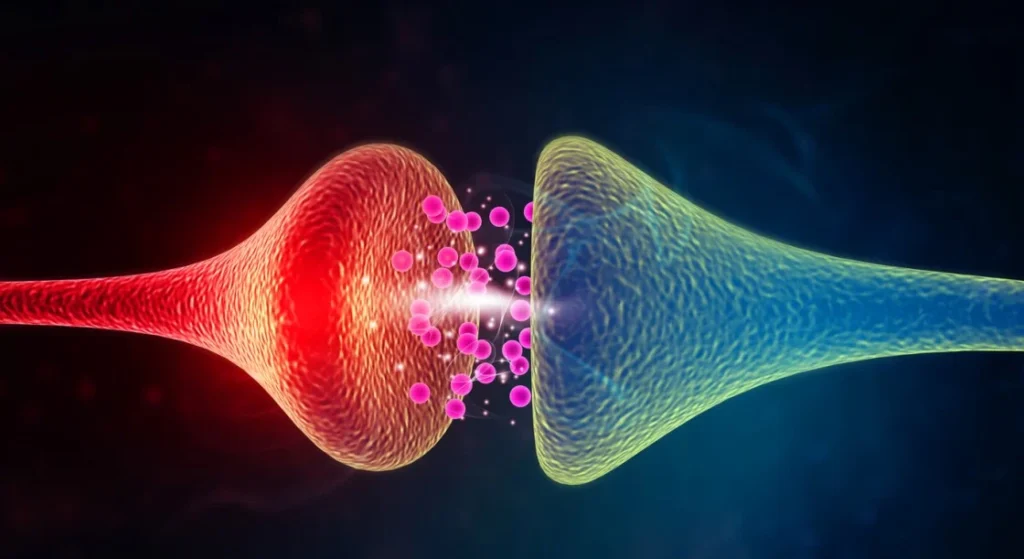
Peptides for Tendon Repair — Which Compounds Deliver the Strongest Preclinical Evidence?
Of all the tissues in the musculoskeletal system, tendons present the greatest challenge to natural healing. The reason is vascular — tendons have a notoriously poor blood supply compared to muscle or bone, meaning they receive limited delivery of the oxygen, nutrients, growth factors, and immune cells needed to drive repair. The result is that tendon injuries heal slowly, incompletely, and with a high rate of re-injury — a pattern that has driven intense research interest in peptides for tendon repair.
Peptides for tendon repair — why tendons are the hardest tissue to heal and how peptides help
BPC-157 addresses the fundamental vascular limitation of tendon healing directly. Its primary mechanism in tendon tissue is the upregulation of VEGF (vascular endothelial growth factor) — the key signaling protein that drives angiogenesis, the formation of new blood vessels. By stimulating the growth of new vasculature into the tendon repair zone, BPC-157 effectively bypasses the blood supply limitation that constrains natural tendon healing — delivering the repair resources that tendon tissue cannot adequately attract on its own.
Published preclinical research has demonstrated BPC-157’s ability to:
- Accelerate tendon-to-bone healing by upregulating growth hormone receptor expression in tendon fibroblasts
- Increase the tensile strength of healing tendon tissue compared to untreated controls
- Reduce the formation of disorganized scar tissue — the primary reason healed tendons are weaker and more prone to re-injury than native tissue
- Stimulate tendon outgrowth and cell migration in ex-vivo tendon explant studies
Best Peptide for Tendon Repair — BPC-157, TB-500, and Beyond Compared
The question of which is the best peptide for tendon repair depends on the specific aspect of tendon healing being prioritized. Here is a direct comparison of the most evidence-supported options:
| Peptide | Primary Tendon Mechanism | Strength of Evidence | Best Application |
|---|---|---|---|
| BPC-157 | VEGF upregulation, angiogenesis, fibroblast activation | Very strong — multiple preclinical studies | Primary tendon repair agent — all tendon injury types |
| TB-500 | Actin upregulation, cell migration, anti-inflammatory | Strong — systemic repair support | Complementary systemic repair — chronic tendon conditions |
| IGF-1 LR3 | Satellite cell activation, collagen synthesis | Moderate — strong in muscle, emerging in tendon | Muscle-tendon junction injuries |
| GHK-Cu | Collagen remodeling, anti-inflammatory, TGF-beta | Moderate | Connective tissue support, chronic tendinopathy |
| CJC-1295 + Ipamorelin | GH stimulation → collagen synthesis | Moderate — indirect mechanism | Long-term tendon remodeling support |
Best peptide for tendon repair — comparing BPC-157 and TB-500 head to head
BPC-157 and TB-500 are the two most widely researched peptides for tendon repair and are most commonly used in combination. Their mechanisms are complementary rather than overlapping — BPC-157 drives local vascular and fibroblast activity at the injury site, while TB-500 provides systemic repair mobilization through actin upregulation and cell migration facilitation. Together they address the two primary constraints of tendon healing — poor vascularity and limited cell migration — simultaneously. For most tendon injury protocols, this combination represents the strongest available evidence base among all peptides for healing tendons.
Peptides for Healing Injuries — A Complete Breakdown by Injury Type and Tissue Category
Different tissues require different peptide approaches. Here is a comprehensive breakdown of the best peptides for healing across major injury categories:
Muscle tears and strains
Muscle tissue has a relatively robust natural healing capacity due to its rich vascularity and resident satellite cell population — but healing is still limited by inflammation severity and the speed of satellite cell activation. The best peptides for healing muscle injuries are:
- BPC-157 — reduces inflammatory damage and stimulates angiogenesis at the tear site
- IGF-1 LR3 — directly activates muscle satellite cells for fiber repair and regeneration
- TB-500 — systemic actin upregulation accelerates cell migration into the injury zone
- CJC-1295 + Ipamorelin — overnight growth hormone optimization supports protein synthesis during recovery
Ligament injuries
Ligaments share many of the vascular limitations of tendons, making them similarly challenging healing environments. Published research on BPC-157 in ligament models shows comparable results to tendon studies — accelerated healing, improved tensile strength, and reduced scar tissue formation. TB-500’s systemic activity provides valuable complementary support for the widespread connective tissue involvement common in complex ligament injuries.
Bone fractures
Bone has a better intrinsic healing capacity than tendon or ligament, but complex fractures, stress fractures, and fractures in older individuals with reduced bone density can benefit significantly from peptides for healing injuries that accelerate the bone remodeling process. BPC-157 has demonstrated accelerated cortical bone healing in preclinical fracture models. IGF-1 LR3’s ability to stimulate osteoblast activity makes it one of the most relevant peptides for healing bone specifically. CJC-1295’s growth hormone stimulation provides systemic support for the calcium deposition and collagen cross-linking that determine fracture healing quality.
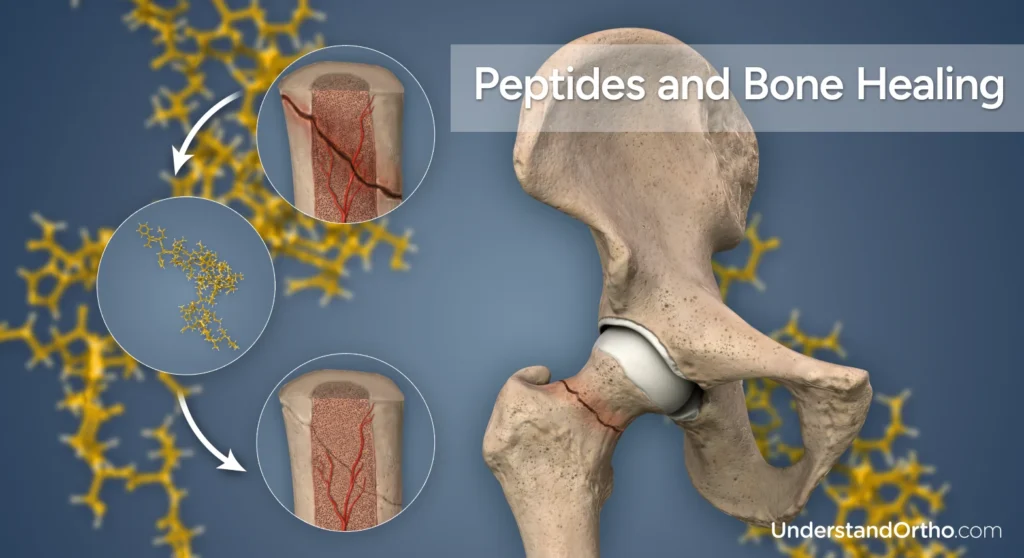
Peptides for Recovery — How the Top Compounds Accelerate Every Stage of the Healing Cascade
Peptides for recovery work most effectively when matched to the specific phase of healing the body is currently in. Here is a phase-by-phase protocol framework:
Acute phase (days 1–7) — anti-inflammatory and vascular support:
- BPC-157 at 250–500mcg twice daily — begins angiogenesis and fibroblast activation immediately
- TB-500 at 2–2.5mg twice weekly — systemic anti-inflammatory and cell migration support
- Focus on controlling excessive inflammation while preserving the acute immune response needed to initiate repair
Sub-acute phase (weeks 2–6) — proliferative support:
- Continue BPC-157 at 250mcg once or twice daily
- Add IGF-1 LR3 at 20–40mcg post-rehabilitation session for muscle and tendon junction injuries
- CJC-1295 + Ipamorelin before sleep to optimize overnight growth hormone pulse and collagen synthesis
Remodeling phase (weeks 6–16+) — matrix maturation and strength:
- CJC-1295 + Ipamorelin continued for growth hormone optimization
- GHK-Cu at 1–2mg twice weekly for collagen remodeling and anti-inflammatory support
- TB-500 at reduced maintenance dose (2mg once weekly) for ongoing systemic repair support
Peptides for Inflammation — How Recovery Peptides Modulate the Immune Response
One of the most important and underappreciated functions of peptides for healing is their ability to modulate inflammation — not simply suppress it as NSAIDs and corticosteroids do, but intelligently regulate it in a way that preserves healing while eliminating the chronic inflammation that delays recovery.
Peptides for inflammation — the difference between acute and chronic inflammatory modulation
Acute inflammation is a necessary and beneficial response to tissue injury — it clears damaged cells, recruits repair cells, and initiates the healing cascade. The problem arises when acute inflammation fails to resolve and becomes chronic — a state characterized by persistent cytokine elevation, ongoing tissue degradation, and impaired healing progression.
BPC-157 modulates inflammation through multiple pathways:
- Downregulation of pro-inflammatory cytokines including TNF-alpha and IL-6 at injury sites
- Upregulation of anti-inflammatory mediators that facilitate the transition from inflammatory to proliferative phase
- Direct protection of endothelial cells from inflammatory damage — preserving the vascular integrity needed for repair
TB-500 contributes to peptides for inflammation through:
- Actin-mediated regulation of immune cell migration and inflammatory signaling
- Reduction of reactive oxygen species production in inflamed tissue
- Facilitation of the resolution phase of inflammation through T-regulatory cell activity
GHK-Cu addresses chronic inflammation specifically through:
- Broad downregulation of inflammatory gene expression — published research shows GHK-Cu modulates over 4,000 genes related to inflammatory signaling
- Direct antioxidant activity reducing oxidative damage in chronically inflamed tissue
- TGF-beta pathway modulation that reduces excessive fibrosis — the primary cause of dysfunctional scar tissue formation
Peptides for inflammation — how recovery peptides differ from NSAIDs and corticosteroids
NSAIDs and corticosteroids broadly suppress inflammatory signaling — effectively reducing pain and swelling but simultaneously impeding the biological processes needed for repair. Long-term NSAID use is associated with delayed tendon healing, impaired bone remodeling, and gastrointestinal complications. Corticosteroid injections provide short-term pain relief but are consistently associated with long-term tendon weakening and increased re-injury risk in published sports medicine literature.
Peptides for inflammation take a fundamentally different approach — modulating rather than suppressing the inflammatory cascade, preserving the repair-initiating functions of acute inflammation while accelerating resolution of the chronic inflammatory states that impede healing.
Peptides for Joint Repair — The Best Compounds for Cartilage, Synovial Tissue, and Bone
Joint health represents one of the most challenging healing applications in regenerative medicine — cartilage has essentially no capacity for self-repair in adults, and synovial tissue degeneration in conditions like osteoarthritis progresses inexorably without intervention. Peptides for joint repair represent one of the most actively researched frontiers in this space.
Peptides for joint repair — how BPC-157 and GHK-Cu target cartilage regeneration
BPC-157 has demonstrated direct chondroprotective activity in preclinical joint models:
- Reduction of cartilage degradation in experimental osteoarthritis models
- Stimulation of synovial fibroblast activity and synovial fluid production
- Protection of subchondral bone architecture from inflammatory degradation
- Reduction of the joint space narrowing associated with progressive cartilage loss
GHK-Cu contributes to peptides for joint repair through:
- Collagen type II stimulation — the primary structural collagen of articular cartilage
- Proteoglycan synthesis upregulation — proteoglycans are the water-attracting molecules that give cartilage its shock-absorbing properties
- Anti-inflammatory activity in synovial tissue that reduces the cytokine-driven cartilage degradation characteristic of inflammatory joint conditions
Peptides for joints — long-term maintenance protocols for chronic joint health
For individuals managing chronic joint conditions rather than acute injuries, peptides for joints are best approached as long-term maintenance protocols rather than acute intervention cycles. A maintenance protocol typically involves:
- BPC-157: 250mcg once daily, 5 days per week, in repeating 8-week cycles with 4-week breaks
- GHK-Cu: 1–2mg twice weekly continuously or in 12-week cycles
- CJC-1295 + Ipamorelin: 5 nights per week continuously — providing the sustained growth hormone optimization that supports ongoing collagen synthesis and joint tissue maintenance
Peptide Injections for Healing — Administration Routes, Protocols, and What to Expect
Peptide injections for healing are the gold standard delivery method for most recovery peptides — providing the highest bioavailability and most direct delivery to target tissues. Understanding the available administration routes helps researchers and clinicians design the most effective protocols.
Peptide injections for healing — subcutaneous vs. intramuscular vs. local injection explained
Subcutaneous injection (most common):
- Administered into the fatty tissue layer beneath the skin — typically the abdomen, thigh, or upper arm
- Provides slow, sustained absorption into systemic circulation
- Most appropriate for systemic repair peptides like TB-500 and growth hormone secretagogues
- 27–31 gauge needle, 4–8mm length — minimal discomfort with correct technique
Intramuscular injection:
- Administered directly into muscle tissue — typically the deltoid, vastus lateralis, or gluteus
- Faster absorption than subcutaneous — useful when more rapid systemic distribution is desired
- 23–25 gauge needle, 25–38mm length — requires greater anatomical knowledge for safe administration
Local injection (near injury site):
- BPC-157 specifically demonstrates enhanced efficacy when administered as close to the injury site as practically and safely possible
- Sub-tendinous or peri-tendinous injection routes are used in clinical settings for direct tendon delivery
- Requires medical supervision and anatomical expertise — not appropriate for self-administration
Peptides for Healing After Surgery — Pre-Operative and Post-Operative Protocol Guide
Peptides for healing after surgery represent one of the most clinically relevant applications of recovery peptides — and one of the most time-sensitive. Surgical trauma initiates an immediate and intense healing cascade that peptides for recovery can either amplify (if begun pre-operatively) or accelerate (if begun post-operatively).
Peptides for healing after surgery — the pre-operative loading protocol explained
Pre-operative peptide loading — beginning a protocol 2–4 weeks before elective surgery — has been explored in preclinical research as a strategy to prime the body’s repair machinery before surgical trauma occurs. The rationale is that pre-loading BPC-157 and TB-500 increases baseline angiogenic activity, fibroblast priming, and growth factor receptor expression — effectively putting the repair cascade in a state of heightened readiness before the surgical insult.
Suggested pre-operative protocol (elective surgery, 2–4 weeks prior):
- BPC-157: 250mcg subcutaneously once daily
- TB-500: 2mg subcutaneously twice weekly
- CJC-1295 + Ipamorelin: 100mcg each subcutaneously before sleep, 5 nights weekly
Suggested post-operative protocol (beginning 24–48 hours post-surgery with surgeon approval):
- BPC-157: 250–500mcg subcutaneously twice daily for the first 4 weeks, then once daily
- TB-500: 2–2.5mg subcutaneously twice weekly for 6 weeks (loading), then once weekly (maintenance)
- IGF-1 LR3: 20–40mcg subcutaneously once daily for weeks 3–6 (after initial inflammatory phase)
- CJC-1295 + Ipamorelin: continued throughout recovery for overnight growth hormone optimization
Best Peptides for Recovery — How to Stack, Dose, and Cycle for Maximum Healing Results
Designing the best peptides for recovery stack requires matching compounds to injury type, phase of healing, and individual research objectives. Here is a comprehensive stacking reference:
| Injury Type | Primary Peptide | Secondary Peptide | Tertiary Support | Protocol Duration |
|---|---|---|---|---|
| Acute tendon tear | BPC-157 | TB-500 | CJC-1295 / Ipamorelin | 12–16 weeks |
| Chronic tendinopathy | TB-500 | BPC-157 | GHK-Cu | 16–24 weeks |
| Ligament sprain | BPC-157 + TB-500 | IGF-1 LR3 | CJC-1295 | 12–20 weeks |
| Muscle tear | BPC-157 | IGF-1 LR3 | TB-500 | 8–12 weeks |
| Bone fracture | BPC-157 | IGF-1 LR3 | CJC-1295 | 12–16 weeks |
| Post-surgical recovery | BPC-157 + TB-500 | CJC-1295 / Ipamorelin | IGF-1 LR3 (week 3+) | 16–24 weeks |
| Chronic joint condition | BPC-157 | GHK-Cu | CJC-1295 / Ipamorelin | Ongoing maintenance |
| Cartilage degeneration | BPC-157 + GHK-Cu | TB-500 | CJC-1295 | 20–24 weeks |
Frequently Asked Questions
What are the best peptides for healing in 2026?
The best peptides for healing based on published preclinical evidence are BPC-157, TB-500, IGF-1 LR3, GHK-Cu, and the CJC-1295/Ipamorelin combination. Each targets a different aspect of the healing cascade and they are most effective when stacked strategically based on injury type and healing phase. BPC-157 is the most broadly applicable single compound across tissue types.
What is the best peptide for tendon repair?
BPC-157 is the best peptide for tendon repair based on the breadth and consistency of preclinical evidence — particularly for its VEGF-driven angiogenesis activity that directly addresses the vascular limitation of tendon healing. TB-500 is the most effective complementary compound for systemic repair support. Together they represent the strongest available protocol for peptides for healing tendons.
How do peptides for healing after surgery work?
Peptides for healing after surgery work by amplifying the body’s post-surgical repair cascade — stimulating angiogenesis and fibroblast activity in the surgical wound (BPC-157), mobilizing systemic repair resources through actin upregulation (TB-500), optimizing overnight growth hormone release for collagen synthesis (CJC-1295/Ipamorelin), and activating tissue-specific satellite cells and progenitor populations (IGF-1 LR3).
Are peptides for inflammation safe for long-term use?
Based on available preclinical data, BPC-157, TB-500, and GHK-Cu — the primary peptides for inflammation — all demonstrate favorable safety profiles in published animal studies at research doses. Long-term human safety data is limited for most compounds outside the GLP-1 class. Cycling protocols are recommended for all compounds to preserve receptor sensitivity and avoid potential endocrine axis effects.
How long do peptides for recovery take to show results?
Most researchers and clinicians report measurable improvements within 4–8 weeks for acute injuries using BPC-157 and TB-500. Tendon and ligament injuries typically require 12–20 weeks for significant functional improvement. Cartilage and joint repair protocols often require 20–24 weeks or longer given the limited intrinsic regenerative capacity of these tissues.
What are the best peptides for joint repair?
The best peptides for joint repair are BPC-157 for chondroprotection and synovial tissue support, GHK-Cu for collagen type II synthesis and proteoglycan production, TB-500 for systemic anti-inflammatory activity, and CJC-1295/Ipamorelin for long-term growth hormone optimization supporting ongoing joint tissue maintenance.
Can peptide injections for healing be used alongside physiotherapy?
Yes — peptide injections for healing and physiotherapy work through complementary mechanisms and are increasingly being explored in combination in sports medicine research. Peptides accelerate the biological repair process while physiotherapy optimizes biomechanical loading and movement patterns — together they address both the tissue-level and functional aspects of recovery.
What purity standards should I look for when sourcing peptides for injury recovery?
A minimum of 98% purity by HPLC analysis confirmed by an independent third-party laboratory is the research-grade standard for any peptides for injury recovery. Mass spectrometry verification of molecular weight and amino acid sequence is also essential. Peptides Lab provides batch-specific COAs from accredited independent laboratories on every product listing.
Final Thoughts: Peptides for Healing — The Future of Recovery Is Already Here
The evidence base for peptides for healing has reached a level of sophistication and depth that is impossible to dismiss. From BPC-157’s remarkable tendon and tissue repair profile to TB-500‘s systemic healing mobilization, from peptides for inflammation that modulate rather than suppress the immune response to peptides for joint repair that address cartilage degeneration at the molecular level — the best peptides for healing represent a genuinely transformative category of research tools.
Whether you are managing an acute tendon injury, navigating post-surgical recovery, addressing chronic joint degeneration, or designing a comprehensive peptides for recovery protocol from the ground up — the compounds, the evidence, and the verified sourcing are all available at Peptides Lab.
Browse our complete peptides for healing collection, review our published batch COAs, and build your recovery protocol with complete confidence — only at Peptides Lab.
References
- Sikiric, P., et al. (2018). Stable Gastric Pentadecapeptide BPC 157 — Novel Therapy in Gastrointestinal Tract. Current Pharmaceutical Design, 24(18), 1994–2003.
- Chang, C.H., et al. (2011). The promoting effect of pentadecapeptide BPC 157 on tendon healing involves tendon outgrowth, cell survival, and cell migration. Journal of Applied Physiology, 110(3), 774–780.
- Goldstein, A.L., et al. (2012). Thymosin Beta-4 — a multi-functional regenerative peptide. Annals of the New York Academy of Sciences, 1269, 1–6.
- Smart, N., et al. (2007). Thymosin Beta-4 induces adult epicardial progenitor mobilization and neovascularization. Nature, 445, 177–182.
- Pickart, L. & Margolina, A. (2018). Regenerative and Protective Actions of the GHK-Cu Peptide in Human Body Organs. International Journal of Molecular Sciences, 19(7), 1987.
- Tomas, F.M., et al. (1993). Insulin-like growth factor-I variants are anabolic in rats after partial pancreatectomy. Biochemical Journal, 291(3), 781–786.
- Teichman, S.L., et al. (2006). Prolonged stimulation of growth hormone secretion by CJC-1295. Journal of Clinical Endocrinology & Metabolism, 91(3), 799–805.
- Huang, T., et al. (2015). BPC 157 significantly attenuated the surgery-induced functional impairment in rats with tendon-to-bone healing. Journal of Orthopaedic Research, 33(11), 1611–1619.
- Malinda, K.M., et al. (1999). Thymosin Beta-4 accelerates wound healing. Journal of Investigative Dermatology, 113(3), 364–368.
- World Anti-Doping Agency. (2024). Prohibited List — Peptide Hormones, Growth Factors and Related Substances. WADA. www.wada-ama.org
- Lau, J.L. & Dunn, M.K. (2018). Therapeutic peptides — historical perspectives, current development trends, and future directions. Bioorganic & Medicinal Chemistry, 26(10), 2700–2707.
- Fosgerau, K. & Hoffmann, T. (2015). Peptide therapeutics — current status and future directions. Drug Discovery Today, 20(1), 122–128.
