
BLOG
CJC 1295 Ipamorelin Tablets — The Complete Guide to Oral Peptides, Dosage, and Where to Buy CJC 1295 in 2026
The conversation around CJC 1295 ipamorelin oral delivery has shifted dramatically in 2026. What was once a firmly injection-dominated research space is now seeing genuine scientific and commercial interest in CJC 1295 oral tablet formulations — driven by advances in peptide stabilization technology, growing demand for needle-free alternatives, and a research community increasingly focused on improving compliance and accessibility in growth hormone optimization protocols.
Whether you are looking for CJC 1295 for sale in tablet or injectable form, trying to understand the difference between CJC no DAC ipamorelin and its DAC counterpart, exploring whether ipamorelin oral delivery can match injection efficacy, or simply trying to find the best place to buy CJC 1295 from a verified, trustworthy source — this comprehensive guide from Peptides Lab covers everything you need to know before placing your first order.
What Are CJC 1295 Ipamorelin Tablets and Why Is Interest in CJC 1295 Oral Exploding in 2026?
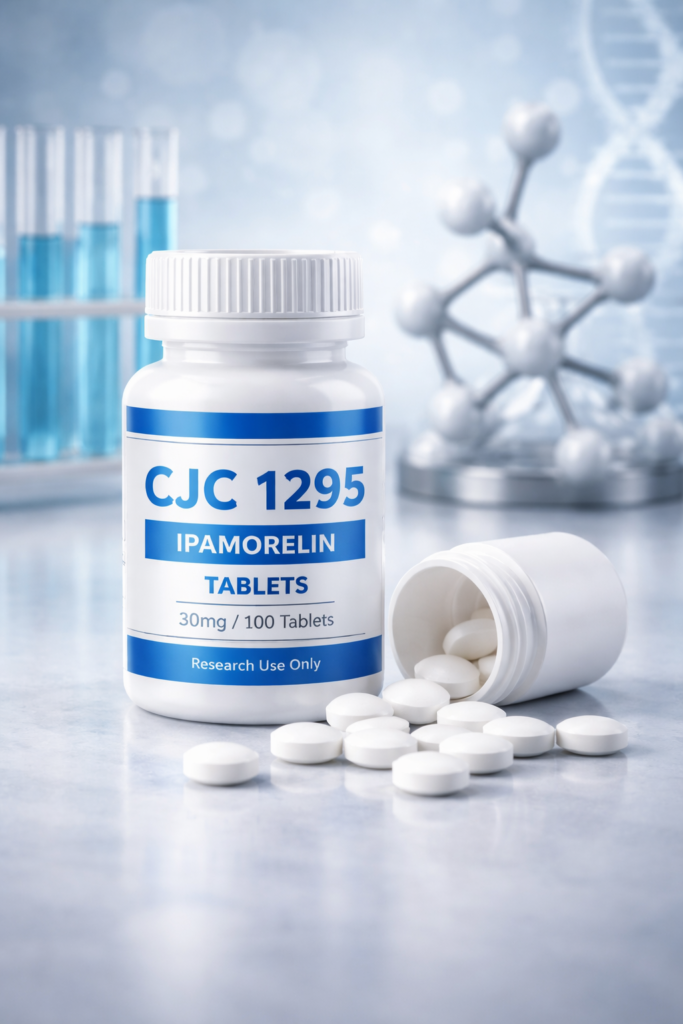
CJC 1295 ipamorelin tablets are oral formulations combining two of the most widely researched growth hormone-stimulating peptides — CJC 1295 and Ipamorelin — into a single convenient delivery format. To understand why this combination has become one of the most sought-after products in the research peptide space, it helps to understand what each component does and why they work so powerfully together.
CJC 1295 is a synthetic analog of growth hormone releasing hormone (GHRH) — the hypothalamic peptide that signals the anterior pituitary to release growth hormone. By binding to and activating GHRH receptors in the pituitary, CJC 1295 amplifies the body’s natural growth hormone pulse — producing higher peak GH levels with each pulse while preserving the physiological pulsatile pattern that distinguishes GHRH analogs from exogenous GH administration.
Ipamorelin is a selective growth hormone secretagogue — a ghrelin receptor agonist that stimulates GH release through a complementary but distinct pathway to CJC 1295. Its defining characteristic is selectivity — unlike earlier GHRPs such as GHRP-2 and GHRP-6, Ipamorelin stimulates GH release without significantly elevating cortisol or prolactin — two hormones whose elevation is associated with the side effects that limit the utility of less selective compounds.
Together CJC 1295 and Ipamorelin work synergistically — the GHRH analog amplifies the amplitude of GH pulses while the ghrelin receptor agonist increases their frequency — producing a combined growth hormone response significantly greater than either compound alone.
How CJC 1295 stimulates growth hormone releasing hormone receptors in the pituitary
CJC 1295’s mechanism begins at the hypothalamic-pituitary axis. GHRH receptors on pituitary somatotroph cells are the molecular targets — when activated by CJC 1295, these receptors trigger the synthesis and release of growth hormone in a pulsatile pattern. The version without DAC (Drug Affinity Complex) produces shorter, more physiological pulses that closely mimic natural GHRH signaling — making CJC no DAC the preferred formulation for most research protocols focused on maintaining natural GH rhythm.
CJC 1295 for Sale — Understanding Your Legal Options Before You Buy CJC 1295
Before you search for CJC 1295 for sale, understanding the regulatory framework governing its purchase is essential. CJC 1295 and Ipamorelin are research peptides — not FDA-approved pharmaceutical products. In the United States and most major markets they are legally purchasable from licensed research peptide suppliers for legitimate laboratory and preclinical non-human research purposes.
Legal sourcing options for CJC 1295 for sale:
- Verified research peptide suppliers — the most accessible and legally clear route for laboratory research use, available as lyophilized powder, injectable solution, or increasingly as oral tablet formulations
- Licensed compounding pharmacies — available with a physician’s prescription for off-label growth hormone optimization protocols in certain states
- Telehealth platforms — emerging option in jurisdictions permitting compounded CJC 1295 and Ipamorelin prescriptions for anti-aging, recovery, or metabolic health applications
- Peptides Lab — domestically stocked, third-party tested CJC 1295 for sale in both injectable and oral tablet formats with full COA documentation
⚠️ CJC 1295 and Ipamorelin are prohibited by WADA for competitive athletes in and out of competition. Always verify your sport’s anti-doping regulations before initiating any CJC 1295 ipamorelin oral protocol.
Buy CJC 1295 — What Separates Legitimate Suppliers From Fraudulent Listings in 2026
The decision to buy CJC 1295 from any supplier requires the same systematic verification approach that applies to any research peptide purchase. The CJC 1295 for sale market has attracted both excellent legitimate suppliers and a significant number of fraudulent or low-quality operators — and distinguishing between them is not always straightforward.
What legitimate suppliers provide when you buy CJC 1295:
- Batch-specific third-party COA from an accredited independent laboratory — Janoshik, Simec AG, Core Labs, or equivalent. For CJC 1295 ipamorelin oral tablet formulations this should include both HPLC purity analysis and mass spectrometry confirmation of each peptide component
- HPLC-confirmed purity of 98% or higher for each peptide component — CJC 1295 and Ipamorelin should both meet this standard independently
- Clear labeling including peptide identity, concentration, batch number, and expiry date for both injectable and oral tablet formats
- Transparent business identity — verifiable physical address, contact information, and professional web presence
- Research-use compliance — no false human-use, therapeutic, or FDA-approval claims anywhere in the product listing
- Cold-chain compliant shipping for injectable formats — insulated packaging with appropriate temperature control for domestic transit
CJC 1295 for sale — red flags to avoid in any supplier:
- No independent third-party COA or COA from supplier’s own in-house laboratory only
- Claims of FDA approval or therapeutic equivalence to pharmaceutical HGH
- CJC 1295 for sale pricing dramatically below market rate with no quality documentation
- Pre-mixed liquid solutions for CJC 1295 ipamorelin oral tablet alternatives shipped without cold-chain provisions
- No batch number on product listing making COA cross-referencing impossible
- Anonymous seller identity with no verifiable business information
At Peptides Lab every CJC 1295 for sale listing includes a publicly accessible batch-specific COA from an accredited independent laboratory — before you buy CJC 1295 you can verify exactly what you are purchasing.
10mg CJC 1295 Ipamorelin — What This Concentration Means and Is It Right for Your Protocol?
10mg CJC 1295 ipamorelin refers to a combined formulation containing 10 milligrams of total peptide — typically split between CJC 1295 and Ipamorelin in a defined ratio, most commonly 1:1 (5mg CJC 1295 + 5mg Ipamorelin) or 2:1 (approximately 6.67mg CJC 1295 + 3.33mg Ipamorelin).
Understanding what 10mg CJC 1295 ipamorelin means in practical dosing terms:
- A 10mg combined vial reconstituted with 2ml bacteriostatic water yields a solution where each 0.1ml contains 500mcg total peptide
- At a standard research dose of 100mcg CJC 1295 + 100mcg Ipamorelin per administration, a 10mg vial provides approximately 10 research administrations
- At higher research doses of 300mcg each, the same vial provides approximately 8 administrations before the lower-concentration component is exhausted
10mg CJC 1295 ipamorelin — how to calculate your correct dose from a 10mg vial or tablet
For 10mg CJC 1295 ipamorelin oral tablet formulations the dosing calculation differs from injectable reconstitution. Oral tablets are typically manufactured at fixed concentrations per tablet — most commonly 500mcg, 1mg, or 2mg per tablet of combined peptide. The challenge with oral tablets is ensuring consistent peptide delivery per dose — a function of formulation quality, enteric coating technology, and manufacturing standardization that varies enormously between suppliers.
CJC No DAC Ipamorelin — What Is the Difference and Which Version Should You Choose?
The distinction between CJC no DAC ipamorelin and CJC 1295 with DAC (Drug Affinity Complex) is one of the most important — and most frequently misunderstood — decisions in any CJC 1295 ipamorelin oral or injectable protocol.
CJC no DAC ipamorelin — understanding the half-life difference and pulsatile vs. sustained release
CJC 1295 without DAC (also known as Modified GRF 1-29 or Mod GRF 1-29) has a half-life of approximately 30 minutes. It produces a sharp, physiological GH pulse that closely mimics the natural GHRH-driven growth hormone release pattern — rising rapidly and resolving within 2–3 hours.
CJC 1295 with DAC incorporates a Drug Affinity Complex that binds covalently to albumin in the bloodstream, extending the half-life to approximately 6–8 days. This produces a sustained, continuous elevation of GH levels rather than the pulsatile pattern of the no-DAC version.
Why CJC no DAC is preferred for most research protocols:
The pituitary’s growth hormone response is physiologically designed to be pulsatile. Continuous GH stimulation — as produced by the DAC version — can lead to GH receptor desensitization and disruption of the natural feedback mechanisms that regulate the growth hormone axis. CJC no DAC ipamorelin preserves the pulsatile GH release pattern that research suggests is most beneficial for body composition, recovery, sleep quality, and long-term endocrine health.
| Feature | CJC No DAC | CJC 1295 With DAC |
|---|---|---|
| Half-life | 30 minutes | 6–8 days |
| GH release pattern | Pulsatile (physiological) | Sustained (continuous) |
| Injection frequency | Daily or multiple times daily | Once or twice weekly |
| Pituitary desensitization risk | Low | Moderate to high with extended use |
| Preferred for | Most research protocols | Convenience-focused protocols |
| Compatibility with Ipamorelin | Optimal | Less synergistic |
| Best oral format option | Yes — matches tablet dosing windows | Less appropriate for oral delivery |
CJC no DAC ipamorelin — why the no DAC version is preferred for most research protocols
The synergy between CJC no DAC and Ipamorelin is particularly well-suited to CJC 1295 ipamorelin oral tablet delivery. The short half-life of CJC no DAC means that each tablet administration produces a defined, time-limited GH pulse — making dosing windows predictable and compatible with research protocol design. The DAC version’s week-long half-life makes it poorly suited to the controlled, pulse-by-pulse dosing approach that oral tablets naturally deliver.
CJC 1295 Oral vs. Injection — Bioavailability, Efficacy, and Which Delivers Better Results
The central question for anyone considering CJC 1295 oral tablets over injectable formulations is bioavailability — and it is a question that deserves a scientifically honest answer.
CJC 1295 oral — why peptide stability in the gastrointestinal tract is the key challenge
Peptides face a fundamentally hostile environment in the gastrointestinal tract. Proteolytic enzymes — pepsin in the stomach, trypsin and chymotrypsin in the small intestine — are specifically designed to break peptide bonds. The acidic gastric environment (pH 1.5–3.5) further destabilizes peptide structure before enzymatic degradation even begins. Standard CJC 1295 administered orally without protective formulation technology would be almost completely degraded before reaching systemic circulation.
This is why conventional peptide research has always favored subcutaneous injection — bypassing the GI tract entirely and delivering close to 100% bioavailability directly into systemic circulation.
However — 2026 peptide formulation technology has advanced considerably beyond where it stood even five years ago:
- Enteric coating — pH-sensitive polymer coatings that protect the peptide payload from gastric acid degradation, releasing content only in the alkaline environment of the small intestine
- Nanoparticle encapsulation — lipid nanoparticles and polymer nanoparticles that encapsulate peptide molecules and protect them from enzymatic degradation while facilitating mucosal absorption
- Permeation enhancers — compounds that transiently increase intestinal mucosal permeability to facilitate peptide absorption
- Cyclization and structural modification — chemical modifications to the peptide backbone that increase enzymatic stability without compromising receptor affinity
CJC 1295 ipamorelin oral — what research says about combined oral peptide delivery in 2026
Published research on oral peptide delivery has demonstrated that bioavailability of 10–30% is achievable for small peptides with advanced formulation technology — compared to effectively 0% without protection. While this remains significantly below the 90–100% bioavailability of subcutaneous injection, the clinical and research implications are meaningful — particularly when higher oral doses are used to compensate for reduced bioavailability.
| Delivery Method | CJC 1295 Bioavailability | Ipamorelin Bioavailability | Convenience | GH Pulse Quality |
|---|---|---|---|---|
| Subcutaneous injection | 90–100% | 90–100% | Moderate | Excellent |
| Intramuscular injection | 90–100% | 90–100% | Moderate | Excellent |
| Oral tablet (advanced formulation) | 10–30% | 15–35% | High | Good at higher doses |
| Sublingual (under tongue) | 20–40% | 25–45% | High | Good |
| Standard oral (no protection) | <5% | <5% | High | Poor |
Ipamorelin Oral — How Sublingual and Oral Tablet Delivery Compares to Subcutaneous Injection
Ipamorelin oral delivery has arguably more research support than CJC 1295 oral for the simple reason that Ipamorelin is a smaller peptide — just 5 amino acids — compared to CJC 1295’s 30 amino acids. Smaller peptides generally demonstrate better oral and sublingual bioavailability due to easier mucosal transport and lower susceptibility to complete enzymatic degradation.
Ipamorelin oral — how enteric coating and carrier technologies are improving oral bioavailability
The most clinically meaningful development in ipamorelin oral delivery is the combination of enteric coating with lipid-based carrier systems. By encapsulating Ipamorelin within a lipid nanoparticle and protecting the exterior with an enteric polymer coating, formulators can achieve:
- Protection from gastric acid degradation during gastric transit
- Release of the lipid-encapsulated peptide in the alkaline small intestine
- Facilitation of lymphatic absorption — bypassing hepatic first-pass metabolism
- More consistent and reproducible absorption compared to unprotected oral peptide administration
When ipamorelin oral is combined with CJC no DAC in a co-formulated tablet using these technologies, the result is a CJC 1295 ipamorelin oral product with meaningfully improved bioavailability relative to unprotected oral peptide — though still below injectable standards.
CJC 1295 Ipamorelin Oral — The Complete Dosage and Protocol Guide for 2026
Designing an effective CJC 1295 ipamorelin oral protocol requires accounting for the reduced bioavailability of oral delivery relative to injection while maintaining the physiological principles that make this combination so effective.
Recommended CJC 1295 ipamorelin oral dosage framework:
For oral tablet formulations (advanced enteric-coated, lipid-carrier):
- Starting dose: 1mg combined (500mcg CJC no DAC + 500mcg Ipamorelin) per administration
- Standard research dose: 2mg combined (1mg CJC no DAC + 1mg Ipamorelin) per administration
- Administration timing: 30–60 minutes before sleep on an empty stomach — GH pulse peaks during deep sleep and fasting state maximizes GH amplitude
- Frequency: Once daily, 5 nights per week
- Cycle: 12 weeks on, 4 weeks off — to preserve pituitary receptor sensitivity
For injectable CJC no DAC ipamorelin (reference standard):
- Standard research dose: 100mcg CJC no DAC + 100–200mcg Ipamorelin per administration
- Administration timing: Before sleep, fasting state preferred
- Frequency: Once daily, 5–7 nights per week
- Cycle: 12 weeks on, 4 weeks off
CJC 1295 ipamorelin oral — realistic results timeline for tablets vs. injections
| Timeframe | Injectable Results | Oral Tablet Results |
|---|---|---|
| Week 1–2 | Improved sleep depth, early recovery benefits | Mild sleep improvement, early GH pulse activity |
| Week 3–6 | Noticeable body composition changes, improved energy | Moderate body composition changes, improved recovery |
| Week 7–12 | Significant lean mass improvement, fat reduction | Good lean mass and fat changes at higher doses |
| Post-cycle | Maintained gains with lifestyle support | Maintained gains — somewhat less pronounced |
10mg CJC 1295 Ipamorelin — Storage, Reconstitution, and Handling Guide
Proper handling of 10mg CJC 1295 ipamorelin is essential regardless of whether you are working with injectable lyophilized powder or oral tablet formulations.
For injectable lyophilized 10mg CJC 1295 ipamorelin:
- Store unreconstituted at -20°C protected from light — stable for 24+ months
- Reconstitute with 2ml bacteriostatic water added slowly along the inner vial wall
- Gently swirl — never shake — until fully dissolved
- Store reconstituted solution at 2–8°C and use within 28–30 days
- Each 0.1ml of a 10mg/2ml solution = 500mcg combined peptide
For oral CJC 1295 ipamorelin tablets:
- Store at 2–8°C in original sealed packaging protected from light and moisture
- Do not freeze oral tablet formulations — enteric coating integrity can be compromised by freeze-thaw cycles
- Check expiry date — oral tablet peptide stability is generally 12–18 months under correct storage conditions
- Take on an empty stomach — food consumption significantly reduces peptide absorption through competitive mucosal transport mechanisms
Frequently Asked Questions
What are CJC 1295 ipamorelin tablets and how do they work?
CJC 1295 ipamorelin tablets are oral formulations combining CJC 1295 (a GHRH receptor agonist) and Ipamorelin (a selective ghrelin receptor agonist) to stimulate pituitary growth hormone release through dual complementary pathways. Advanced enteric coating and lipid carrier technologies protect the peptides from gastrointestinal degradation and improve oral bioavailability to 10–35% — making them a meaningful alternative to injection for certain research applications.
Where can I find legitimate CJC 1295 for sale in the USA in 2026?
Legitimate CJC 1295 for sale in the USA is available from verified domestic research peptide suppliers with independent third-party COA documentation, HPLC-confirmed purity of 98% or above, and transparent business identity. Peptides Lab provides domestic US stock of both injectable and oral CJC 1295 ipamorelin with publicly accessible batch COAs on every product listing.
What is CJC no DAC ipamorelin and which version should I choose?
CJC no DAC ipamorelin refers to the combination of Modified GRF 1-29 (CJC 1295 without the Drug Affinity Complex) and Ipamorelin. The no DAC version has a 30-minute half-life producing physiological pulsatile GH release — compared to CJC with DAC’s 6–8 day half-life producing sustained GH elevation. CJC no DAC ipamorelin is preferred for most research protocols and is the optimal version for CJC 1295 ipamorelin oral tablet delivery due to its compatibility with time-defined dosing windows.
Is CJC 1295 oral as effective as injection?
CJC 1295 oral tablet formulations using advanced enteric coating and lipid carrier technology achieve bioavailability of 10–30% — significantly lower than the 90–100% of subcutaneous injection. Higher oral doses can compensate partially for reduced bioavailability, and CJC 1295 ipamorelin oral tablets offer meaningful GH stimulation particularly for protocols where injection compliance is a barrier. Injectable administration remains the gold standard for maximum efficacy.
What does 10mg CJC 1295 ipamorelin mean?
10mg CJC 1295 ipamorelin refers to a combined formulation containing 10 milligrams of total peptide — typically split 1:1 between CJC 1295 and Ipamorelin (5mg each). When reconstituted with 2ml bacteriostatic water each 0.1ml contains 500mcg combined peptide. For oral tablets 10mg CJC 1295 ipamorel in typically provides 5–20 tablet doses depending on the per-tablet concentration.
How long before results are seen from CJC 1295 ipamorelin oral tablets?
Initial CJC 1295 ipamorelin oral results — primarily improved sleep quality and early recovery benefits — are typically reported within the first 2–3 weeks. Measurable body composition changes generally emerge within 6–8 weeks of consistent use. Full protocol results at optimal oral doses are achieved within 10–12 weeks — somewhat slower than injectable protocols due to lower bioavailability.
Can CJC 1295 ipamorelin oral be stacked with other peptides?
Yes — CJC 1295 ipamorelin oral is commonly researched in combination with BPC-157 for recovery applications, IGF-1 LR3 for muscle and tissue repair protocols, and GHK-Cu for comprehensive anti-aging research. Stacking decisions should always be based on published research and conducted within appropriate research frameworks with qualified oversight.
Final Thoughts: CJC 1295 Ipamorelin Tablets — The Future of Oral Peptide Delivery Is Here
The emergence of genuinely effective CJC 1295 ipamorelin oral tablet formulations represents one of the most significant developments in the research peptide space in recent years. While injectable administration remains the gold standard for bioavailability and GH pulse precision, the advances in oral peptide delivery technology that make CJC 1295 oral and ipamorelin oral meaningful research tools are real — and they are accelerating.
Whether you are looking for CJC 1295 for sale in injectable or oral tablet format, evaluating the difference between CJC no DAC ipamorelin and the DAC version, trying to understand what 10mg CJC 1295 ipamorelin means for your dosing protocol, or simply looking for the most trusted place to buy CJC 1295 with verified purity documentation — Peptides Lab is your most reliable source in 2026.
Browse our complete CJC 1295 for sale range including injectable and oral tablet formats, review our published batch COAs, and buy CJC 1295 with complete confidence — only at Peptides Lab.
References
- Teichman, S.L., et al. (2006). Prolonged stimulation of growth hormone and insulin-like growth factor I secretion by CJC-1295 — a long-acting analog of growth hormone-releasing hormone in healthy adults. Journal of Clinical Endocrinology & Metabolism, 91(3), 799–805.
- Raun, K., et al. (1998). Ipamorelin — the first selective growth hormone secretagogue. European Journal of Endocrinology, 139(5), 552–561.
- Bowers, C.Y. (1998). Growth hormone-releasing peptides — structure and kinetics. Journal of Pediatric Endocrinology and Metabolism, 11(2), 679–702.
- Laron, Z. (1995). Growth hormone releasing activity of synthetic peptides. Clinical Endocrinology, 43(4), 371–383.
- Fosgerau, K. & Hoffmann, T. (2015). Peptide therapeutics — current status and future directions. Drug Discovery Today, 20(1), 122–128.
- Muheem, A., et al. (2016). A review on the strategies for oral delivery of proteins and peptides and their clinical perspectives. Saudi Pharmaceutical Journal, 24(4), 413–428.
- Drucker, D.J. (2020). Advances in oral peptide therapeutics. Nature Reviews Drug Discovery, 19(4), 277–289.
- Shen, W.C. (2003). Oral peptide and protein delivery — unfulfilled promises? Drug Discovery Today, 8(13), 607–608.
- World Anti-Doping Agency. (2024). Prohibited List — Growth Hormone Releasing Peptides and GHRH Analogs. WADA. www.wada-ama.org
- Møller, N. & Jørgensen, J.O. (2009). Effects of growth hormone on glucose, lipid, and protein metabolism in human subjects. Endocrine Reviews, 30(2), 152–177.
