
BLOG
Retatrutide Peptide: The Ultimate Guide – 10 Critical Facts Before Buying Retatrutide
Mar
The weight loss and metabolic health space has seen a wave of breakthrough compounds in recent years — but few have generated as much excitement as retatrutide. If you have been searching for where to buy retatrutide, exploring retatrutide for sale listings, or simply trying to understand what this peptide actually does before committing to a purchase, you have come to the right place.
This comprehensive guide from Peptides Lab covers everything — from the science behind retatrutide peptide to retatrutide cost breakdowns, verified sourcing options, and the questions you must ask before you buy retatrutide from any supplier.
What Is Retatrutide Peptide and How Does It Work?
Retatrutide is a next-generation triple-receptor agonist peptide developed by Eli Lilly. Unlike semaglutide (which targets one receptor) or tirzepatide (which targets two), retatrutide simultaneously activates three key metabolic receptors:
- GLP-1 (glucagon-like peptide-1) — reduces appetite and slows gastric emptying
- GIP (glucose-dependent insulinotropic polypeptide) — enhances insulin secretion and fat metabolism
- Glucagon receptor — increases energy expenditure and promotes fat burning
This triple-action mechanism makes retatrutide peptide one of the most potent compounds currently in clinical development for obesity, type 2 diabetes, and metabolic syndrome.
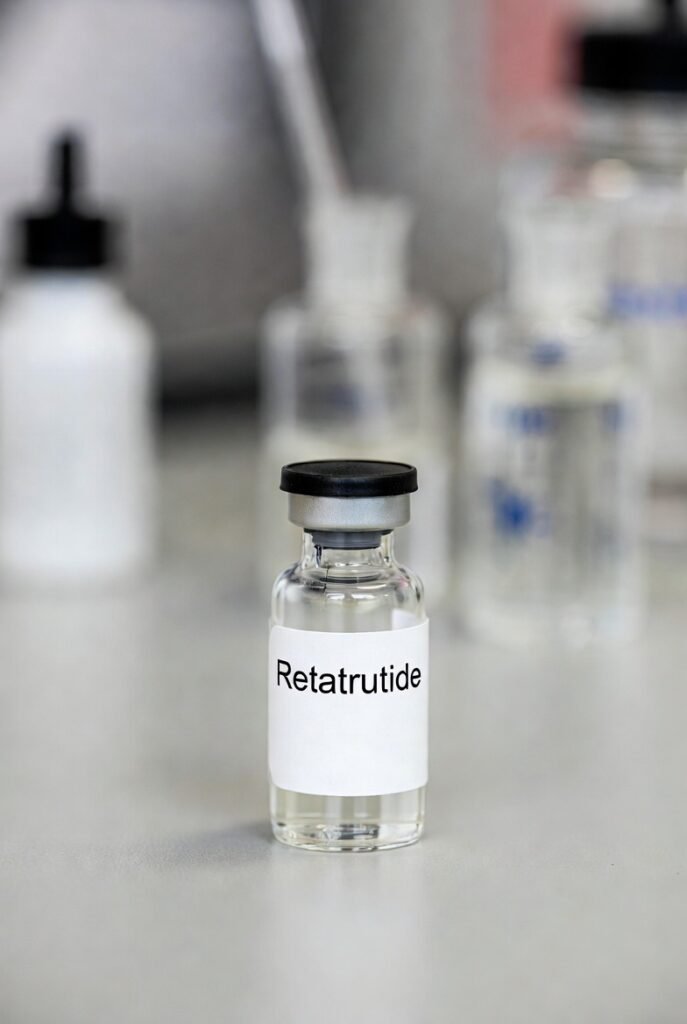
How retatrutide peptide targets GLP-1, GIP, and glucagon receptors simultaneously
By engaging all three receptors at once, retatrutide creates a synergistic metabolic effect that outperforms single or dual-receptor agonists in early trials. Phase 2 clinical data published in the New England Journal of Medicine showed participants losing up to 24% of their body weight over 48 weeks — a figure that surpassed both semaglutide and tirzepatide benchmarks at similar timeframes.
Why Researchers and Clinicians Are Talking About Retatrutide Peptide Buy Options
Retatrutide is still in Phase 3 clinical trials as of early 2026, meaning it has not yet received full FDA approval for commercial use. However, interest in retatrutide peptide buy options has surged among:
- Bariatric and metabolic medicine researchers
- Anti-aging and longevity clinics
- Compounding pharmacies operating in research-use frameworks
- Individuals who have plateaued on semaglutide or tirzepatide
What clinical trials say about retatrutide peptide buy decisions
The Phase 2 TRIUMPH trial demonstrated that retatrutide produced dose-dependent weight loss with a favorable safety profile. Participants on the highest dose (12mg weekly) achieved an average body weight reduction of 22–24%, with continued improvement expected through Phase 3. These results have driven significant demand for retatrutide for sale from research and clinical communities globally.
Where to Buy Retatrutide — Legal and Verified Sources Explained
Understanding where to buy retatrutide safely is critical. Because retatrutide has not yet received FDA approval, it is not available as a commercially prescribed medication in most countries. However, several legitimate channels exist depending on your purpose and jurisdiction.
Legal sourcing options for where to buy retatrutide:
- Licensed compounding pharmacies operating under research or clinical trial exemptions
- Research chemical suppliers that sell retatrutide strictly for laboratory and non-human research purposes
- Clinical trial enrollment — the most legitimate route to access retatrutide under medical supervision
- Telehealth platforms in jurisdictions where compounded versions may be prescribed off-label
- Peptides Lab — verified third-party tested retatrutide peptide with full certificates of analysis
When evaluating where to buy retatrutide, always prioritize suppliers that provide batch-specific third-party testing, transparent sourcing, and clear terms of use.
Retatrutide for Sale: How to Spot Legitimate Suppliers vs. Scams
The surge in demand for retatrutide has attracted a growing number of fraudulent sellers. Knowing how to identify retatrutide for sale from a legitimate source versus a scam can protect both your finances and your health.
Signs of a legitimate retatrutide for sale listing:
- Certificate of analysis (COA) from an independent third-party lab such as Janoshik or Simec AG
- Clear labeling including peptide sequence, molecular weight, purity percentage, and batch number
- Secure, professional website with verifiable contact information and a physical address
- No exaggerated health claims or guaranteed results
- Transparent shipping, storage, and handling instructions
- Customer support staffed by knowledgeable personnel
Red flags to walk away from:
- No COA available or COA from an in-house lab only
- Prices drastically below market rate
- Claims that their retatrutide is “FDA approved” (it is not yet)
- No information on peptide purity, storage requirements, or reconstitution guidelines
- Anonymous sellers with no verifiable business identity
Retatrutide Cost Breakdown — What Should You Expect to Pay?
One of the most searched topics alongside sourcing is retatrutide cost. Because it is not commercially approved, pricing varies widely across suppliers. Here is a general breakdown of what to expect:
| Source | Retatrutide Cost (Approx.) |
|---|---|
| Research peptide suppliers | $80 – $300 per vial (2mg–10mg) |
| Compounding pharmacies | $200 – $600 per month (prescription-based) |
| Clinical trial participation | Free (with eligibility) |
| Telehealth platforms (off-label) | $300 – $800 per month |
| Underground / unverified sources | $30 – $80 (high counterfeit risk) |
⚠️ Retatrutide cost that seems unusually low is almost always a sign of counterfeit, underdosed, or contaminated product. At Peptides Lab, we offer transparent pricing with no hidden fees and full third-party verification for every batch.
Understanding retatrutide cost vs. semaglutide and tirzepatide pricing
For context, brand-name semaglutide (Ozempic/Wegovy) retails at $900 – $1,400/month without insurance in the US, while tirzepatide (Mounjaro/Zepbound) runs $1,000 – $1,200/month. Compounded retatrutide from verified research suppliers is currently more affordable by comparison — though that gap may narrow once full commercialization occurs post-approval.
Where to Get Retatrutide Safely: Clinics, Telehealth, and Research Suppliers
If you are asking where to get retatrutide outside of a clinical trial, your options fall into three main categories:
1. Compounding Pharmacies
Licensed compounding pharmacies in the US, UK, and Australia can prepare retatrutide under specific regulatory frameworks. You will typically need a prescription from a physician willing to prescribe it off-label for research or compassionate use.
2. Telehealth Platforms
Some hormone optimization and metabolic health telehealth providers are beginning to offer retatrutide consultations where legally permissible. These platforms pair you with a licensed provider who evaluates your eligibility before facilitating access.
3. Research Peptide Suppliers
For laboratory and research purposes, verified research peptide suppliers offer retatrutide where to get it with clear research-use disclaimers. This is the most accessible route but requires strict adherence to research-only use guidelines.
Retatrutide where to get it — compounding pharmacies vs. research suppliers
The key difference comes down to oversight. Compounding pharmacies operate under medical supervision with dosing protocols, while research suppliers provide the compound for in-vitro or preclinical research. Always match your sourcing method to your legitimate use case.
Retatrutide Buy Guide: Dosage, Storage, and What to Look For
Before you retatrutide buy from any supplier, understanding proper handling is essential for maintaining product integrity.
Dosage (from clinical trial data):
- Phase 2 trial doses ranged from 1mg to 12mg administered subcutaneously once weekly
- Most research protocols use a dose-escalation model starting at 2mg and increasing gradually
- Always follow the specific protocol provided by your supervising clinician or research director
Storage guidelines:
- Lyophilized (freeze-dried) retatrutide peptide should be stored at -20°C until reconstitution
- Once reconstituted with bacteriostatic water, store at 2–8°C and use within 28–30 days
- Avoid repeated freeze-thaw cycles — these degrade peptide integrity significantly
What to look for when you retatrutide buy:
- Minimum 98%+ purity confirmed by HPLC testing
- Lyophilized powder form (more stable than pre-mixed solutions)
- Clearly stated molecular weight and amino acid sequence on label
- Batch-specific COA included or available on request
How Retatrutide Compares to Semaglutide and Tirzepatide
For anyone already familiar with GLP-1 medications, understanding where retatrutide fits in the landscape is essential before making a retatrutide peptide buy decision.
| Compound | Receptors Targeted | Avg. Weight Loss (Clinical) | Approval Status |
|---|---|---|---|
| Semaglutide | GLP-1 | ~15–17% | FDA Approved |
| Tirzepatide | GLP-1 + GIP | ~20–22% | FDA Approved |
| Retatrutide | GLP-1 + GIP + Glucagon | ~22–24% | Phase 3 Trials |
Retatrutide’s additional glucagon receptor activation sets it apart — glucagon increases energy expenditure and lipolysis (fat breakdown) in ways that GLP-1 and GIP alone cannot achieve. This makes retatrutide peptide a compelling option for individuals who have not achieved adequate results with existing approved therapies.
Is Retatrutide Buy Legal? Regulatory Status by Country
The regulatory landscape for retatrutide varies by country and intended use:
- United States: Not FDA approved; available for research use only through licensed suppliers or compounding pharmacies under physician oversight
- United Kingdom: Not MHRA approved; available through research channels with strict use restrictions
- Canada: Not Health Canada approved; research use only
- Australia: Not TGA approved; Schedule 4 restrictions apply to any compounded version
- European Union: EMA review pending; access varies by member state under research exemptions
- Mexico / Southeast Asia: More accessible; quality controls vary significantly — proceed with caution
⚠️ Regardless of where you are located, always consult a qualified healthcare or legal professional before pursuing any retatrutide buy transaction. Non-compliance with local regulations can result in legal penalties.
Frequently Asked Questions
What is retatrutide peptide and what is it used for?
Retatrutide is a triple-receptor agonist peptide (GLP-1, GIP, glucagon) developed by Eli Lilly. It is currently in Phase 3 clinical trials for the treatment of obesity and type 2 diabetes. Research interest also spans metabolic syndrome, NAFLD (non-alcoholic fatty liver disease), and cardiovascular risk reduction.
Where to buy retatrutide legally and safely in 2026?
The safest legal routes are clinical trial enrollment, licensed compounding pharmacies with a valid prescription, or verified research peptide suppliers for laboratory use. Peptides Lab offers third-party tested retatrutide with full transparency on sourcing and purity.
How much does retatrutide cost per vial or per cycle?
Retatrutide cost typically ranges from $80 to $300 per vial from research suppliers, and $300 to $800 per month through telehealth or compounding pharmacy channels. Prices vary based on dose, supplier, and geographic location.
Where to get retatrutide if it is not yet FDA approved?
Options include enrolling in an active clinical trial, accessing it through a compounding pharmacy with physician oversight, or sourcing it from a verified research peptide supplier for legitimate research purposes. Peptides Lab provides retatrutide with full COA documentation.
Is retatrutide for sale available without a prescription?
From research peptide suppliers, yes — for research purposes only. For clinical or personal therapeutic use, a prescription from a licensed physician is required in most jurisdictions. Using research peptides for self-administration without medical supervision carries significant health risks.
What are the side effects of retatrutide peptide before buying?
Clinical trial data reports side effects consistent with other GLP-1 class medications, including nausea, vomiting, diarrhea, decreased appetite, and injection site reactions. These are generally dose-dependent and tend to diminish after the initial escalation period. Always review the full clinical safety profile before pursuing any retatrutide buy.
How do I know if a retatrutide buy source is legitimate?
Look for a batch-specific certificate of analysis from an independent third-party lab, transparent business information, clear research-use disclaimers, and knowledgeable customer support. Peptides Lab provides all of these as standard with every order.
Final Thoughts: Retatrutide Buy the Right Way
Retatrutide peptide represents one of the most exciting frontiers in metabolic medicine. Its triple-receptor mechanism, impressive clinical trial results, and growing research community have made it one of the most sought-after compounds in the peptide space today.
Whether you are looking to buy retatrutide for legitimate research, exploring retatrutide for sale options through compounding channels, or simply trying to understand where to get retatrutide safely — the most important principle remains the same: source responsibly, verify independently, and always work within your local regulatory framework.
At Peptides Lab, we are committed to being your most trusted source for retatrutide peptide — with full third-party testing, transparent pricing, and expert guidance every step of the way.
References
- Jastreboff, A.M., et al. (2023). Triple–Hormone-Receptor Agonist Retatrutide for Obesity — A Phase 2 Trial. New England Journal of Medicine, 389(6), 514–526.
- Eli Lilly and Company. (2024). Retatrutide Phase 3 TRIUMPH Clinical Trial Program. ClinicalTrials.gov. NCT05929066.
- Nauck, M.A. & D’Alessio, D.A. (2022). Tirzepatide, a dual GIP/GLP-1 receptor co-agonist for the treatment of type 2 diabetes with unmatched effectiveness. Cell Metabolism, 34(4), 925–927.
- Drucker, D.J. (2022). GLP-1 physiology informs the pharmacotherapy of obesity. Molecular Metabolism, 57, 101351.
- US Food and Drug Administration. (2024). Drug Approval Status — Investigational New Drug Compounds. FDA.gov. www.fda.gov
- World Obesity Federation. (2025). Global Obesity Report — Emerging Pharmacotherapies. worldobesity.org. www.worldobesity.org
- Marso, S.P., et al. (2021). GLP-1 receptor agonists and cardiovascular outcomes: a meta-analysis. The Lancet Diabetes & Endocrinology, 9(10), 653–667.
