
BLOG
Buy IGF-1 LR3 in 2026 — Verified Sources, Safe Ordering & Everything You Need to Know
If you have been searching for where to buy IGF-1 LR3 from a source you can genuinely trust, you already know how difficult it is to separate legitimate suppliers from the noise. The market for IGF-1 LR3 for sale has expanded dramatically over the past two years — and with that expansion has come a wave of underdosed, mislabeled, and outright counterfeit products that put both research integrity and personal safety at risk.
This comprehensive guide from Peptides Lab covers everything you need to know before placing any IGF for sale order — from what IGF-1 LR3 actually is and how it works, to how to identify the best IGF LR3 for sale listings, what realistic IGF 1 LR3 for sale pricing looks like in 2026, and how to handle your peptide correctly once it arrives.
What Is IGF-1 LR3 and Why Are Researchers Racing to Buy IGF-1 LR3 in 2026?
IGF-1 LR3 — Insulin-like Growth Factor 1 Long Arg3 — is a synthetic, modified analog of the naturally occurring IGF-1 peptide. It was engineered to be significantly more potent and longer-acting than standard IGF-1 by incorporating a 13-amino acid extension at the N-terminus and substituting arginine for glutamic acid at position 3.
The result is a peptide that binds far less readily to IGF-binding proteins (IGFBPs), which in the natural IGF-1 molecule act as regulatory brakes that limit bioavailability. By reducing IGFBP binding, IGF-1 LR3 remains active in the bloodstream for considerably longer — with a half-life of approximately 20–30 hours compared to standard IGF-1’s half-life of just 12–15 hours.
This extended activity window and enhanced potency have made IGF-1 LR3 one of the most actively researched growth factor peptides in preclinical and laboratory settings, driving sustained demand to buy IGF-1 LR3 from verified, high-purity sources.
How IGF-1 LR3 differs from standard IGF-1 and why researchers prefer it
Standard IGF-1 is rapidly sequestered by binding proteins in circulation, limiting its effective research window. IGF-1 LR3’s structural modification overcomes this limitation, making it the preferred form for researchers studying muscle cell proliferation, satellite cell activation, glucose metabolism, neuroprotection, and tissue repair mechanisms. When evaluating any IGF LR3 for sale option, understanding this distinction helps explain why purity and structural integrity are so critically important — even minor degradation can compromise the very modifications that make LR3 superior to its parent compound.
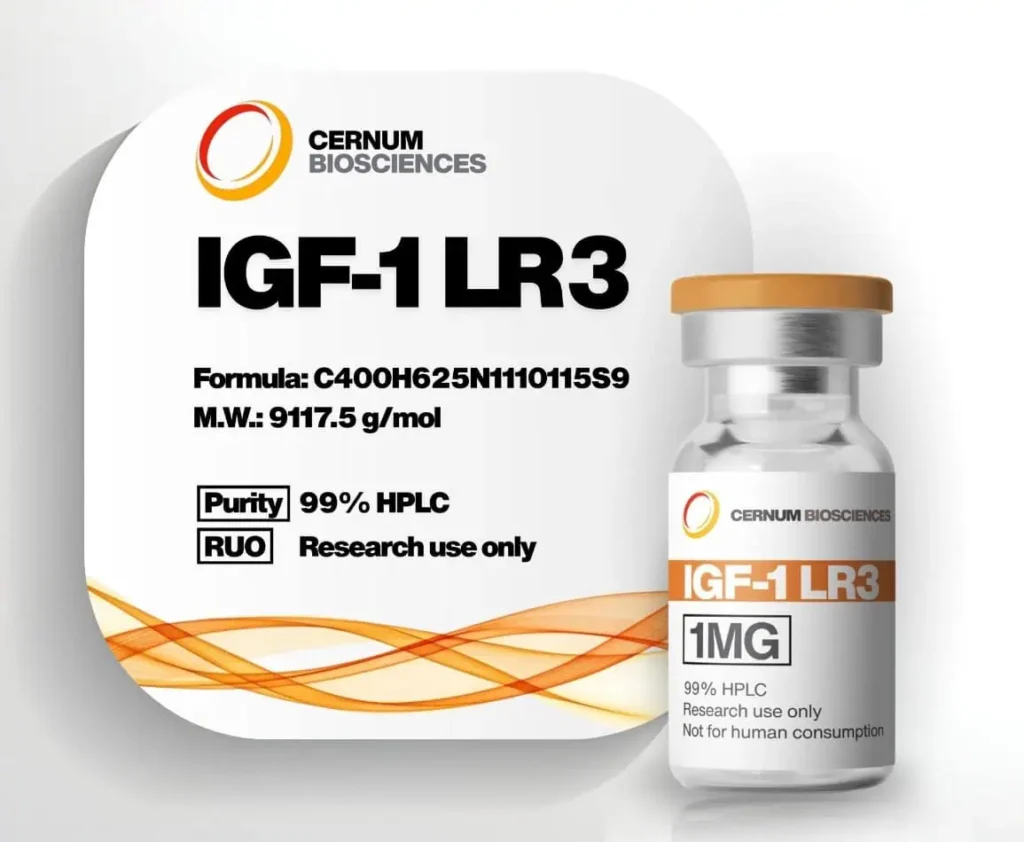
IGF-1 LR3 for Sale — Understanding the Legal Landscape Before You Order
Before you search for IGF-1 LR3 for sale, it is essential to understand where this compound sits from a regulatory standpoint. IGF-1 LR3 is not an FDA-approved pharmaceutical product. It is classified as a research chemical, meaning it is legally available for purchase in the United States for legitimate laboratory and preclinical non-human research purposes.
Key legal considerations when looking for IGF for sale:
- USA: Legal to purchase from licensed research peptide suppliers for research use only. Not approved for human therapeutic use. Listed as a prohibited substance by WADA for competitive athletes
- United Kingdom: Available for research purposes; not licensed for human use under MHRA frameworks
- Canada: Permissible for research use; not approved by Health Canada for therapeutic application
- Australia: Schedule 4 analog restrictions apply; research use frameworks vary by state
- European Union: Available through research channels in most member states with appropriate institutional oversight
⚠️ Peptides Lab supplies IGF-1 LR3 strictly for research and laboratory use. Always verify your local regulations and consult a licensed healthcare or legal professional before placing any IGF 1 LR3 for sale order.
How to Find Legitimate IGF LR3 for Sale — What Separates Real Suppliers from Scams
The single most important skill any researcher or buyer can develop in the peptide space is the ability to identify legitimate IGF LR3 for sale listings from fraudulent ones. The consequences of ordering from an unreliable source range from wasted research budgets to genuine health risks from contaminated or mislabeled compounds.
What a legitimate IGF-1 LR3 for sale listing includes:
- Batch-specific third-party COA from an accredited independent laboratory — Janoshik, Simec AG, Core Labs, or equivalent
- HPLC-confirmed purity of 98% or higher — the minimum acceptable standard for research-grade IGF-1 LR3
- Mass spectrometry (MS) verification — confirms the correct molecular weight and amino acid sequence, not just purity percentage
- Lyophilized powder format — significantly more stable than pre-mixed solutions during transit and storage
- Clear labeling with molecular weight, peptide sequence, batch number, and expiry date
- Cold-chain compliant shipping — insulated packaging with temperature-controlled transit options
- Transparent supplier identity — verifiable physical address, contact information, and professional business presence
- Research-use disclaimer — no false human-use or therapeutic claims anywhere on the listing
What a fraudulent IGF for sale listing looks like:
- No COA available or COA issued only by the supplier’s own in-house lab
- Purity claims above 99.9% with no independent verification — physically implausible for complex peptides
- Prices dramatically below market rate with no documentation to justify them
- Pre-mixed liquid solutions shipped at ambient temperature with no cold-chain provisions
- Vague or missing ingredient information with no batch number
- Claims of FDA approval or human therapeutic certification — categorically false for IGF-1 LR3
Buy IGF-1 LR3 Online — The Complete Step-by-Step Ordering Guide
Once you have identified a legitimate IGF-1 LR3 for sale source, the ordering process itself should follow a clear protocol to ensure you receive the highest quality product possible.
Step 1 — Verify the COA before adding to cart Never place an IGF for sale order without first reviewing the batch-specific COA. Confirm HPLC purity, mass spectrometry results, batch number, and testing laboratory accreditation.
Step 2 — Select the correct vial concentration for your research protocol IGF-1 LR3 is commonly available in 1mg and 100mcg vial formats. For most research protocols, 1mg vials offer the best value and flexibility across multiple experimental applications.
Step 3 — Choose cold-chain shipping IGF-1 LR3 is sensitive to temperature fluctuations. Always select cold-chain compliant shipping — particularly for orders placed during warmer months or to destinations with high ambient temperatures.
Step 4 — Use a secure payment method Reputable suppliers accept major credit cards, ACH bank transfers, or verified cryptocurrency transactions with full payment security protocols.
Step 5 — Confirm order details and batch number Your order confirmation should include the batch number matching your reviewed COA, vial concentration, quantity, and estimated delivery window.
Step 6 — Receive, inspect, and store correctly Inspect packaging integrity immediately upon delivery. Transfer unreconstituted vials to -20°C freezer storage without delay. Document receipt date and batch number for your research records.
How to read your retatrutide peptide order confirmation and COA like a pro
Cross-reference the batch number printed on your vial label against the batch number on the COA. Confirm HPLC purity reads 98% or above. Check that mass spectrometry data confirms the expected molecular weight of IGF-1 LR3 — approximately 9,117.5 Da. If any discrepancy exists between your vial label and your COA, contact your supplier immediately before proceeding.
IGF for Sale — Different Forms, Concentrations, and Which One Is Right for Your Research
Not all IGF for sale products are equivalent. Understanding the available formats helps ensure your research protocol begins with the right starting material.
| Format | Stability | Shelf Life | Best For |
|---|---|---|---|
| Lyophilized powder (1mg vial) | Excellent | 24+ months at -20°C | Most research protocols |
| Lyophilized powder (100mcg vial) | Excellent | 24+ months at -20°C | Smaller scale or pilot studies |
| Pre-mixed solution | Poor | 4–6 weeks refrigerated | Convenience only — not recommended |
| Long-acting formulations | Variable | Supplier-dependent | Specific extended-release protocols |
IGF 1 LR3 for sale — lyophilized powder vs. pre-mixed solution explained
Lyophilized IGF-1 LR3 is freeze-dried under vacuum to remove all moisture, creating a stable powder that retains full peptide integrity for up to 24 months when stored correctly at -20°C. Pre-mixed solutions are convenient but significantly less stable — degradation begins immediately upon reconstitution and is accelerated by any temperature deviation during shipping. For any serious research application, lyophilized is always the correct choice when evaluating IGF 1 LR3 for sale options.
IGF 1 LR3 for Sale — Full Price Breakdown and What to Expect in 2026
Understanding realistic IGF 1 LR3 for sale pricing helps you identify both fair value and suspicious outliers at both ends of the spectrum.
| Vial Size | Standard Market Price | Legitimate Sale Price | Red Flag Price |
|---|---|---|---|
| 100mcg | $25 – $45 | $18 – $28 | Under $10 |
| 1mg | $65 – $120 | $50 – $75 | Under $25 |
| 5mg (bulk) | $280 – $450 | $220 – $300 | Under $100 |
| 10mg (bulk) | $500 – $800 | $400 – $550 | Under $180 |
Why the window to buy IGF-1 LR3 at current prices may be closing
As regulatory scrutiny of research peptides increases globally and manufacturing standards for pharmaceutical-adjacent compounds tighten, production costs for verified, high-purity IGF-1 LR3 are expected to rise through 2026 and into 2027. Researchers and institutions looking to establish long-term supply chains are increasingly moving to lock in current pricing before anticipated cost increases take effect.
Peptides Lab offers transparent, openly listed IGF-1 LR3 for sale pricing with no hidden fees, bulk research discounts for institutional orders, and price-match consideration for verified competing COA-backed listings.
Best Place to Buy IGF-1 LR3 — Domestic USA Suppliers vs. International Options
For US-based researchers, the decision between domestic and international sourcing when you buy IGF-1 LR3 has significant practical implications.
| Factor | Domestic USA | International |
|---|---|---|
| Shipping time | 2–5 business days | 14–35+ days |
| Customs seizure risk | None | Moderate to high |
| Cold-chain integrity | High | Variable to low |
| Dispute resolution | Straightforward | Complex |
| Regulatory clarity | Clear | Jurisdiction-dependent |
| Average price per 1mg | $65 – $120 | $35 – $70 |
The price differential with international suppliers is real — but so are the risks. Extended transit times are the single greatest threat to IGF-1 LR3 integrity, as the peptide is sensitive to temperature fluctuations that are essentially impossible to control across multi-week international shipments. A cheaper vial that arrives degraded is not a bargain — it is a complete loss of research investment.
IGF LR3 for Sale — Storage, Reconstitution, and Handling After Your Order Arrives
Proper post-purchase handling is as important as sourcing quality. Even the purest IGF LR3 for sale product can be rendered ineffective by improper storage or reconstitution.
Storage guidelines:
- Lyophilized (unreconstituted): store at -20°C, protected from light, stable for 24+ months
- Reconstituted solution: store at 2–8°C, use within 21–28 days
- Never store reconstituted IGF-1 LR3 in a standard freezer — freeze-thaw cycles cause irreversible peptide degradation
- Use amber glass vials where possible to minimize light-induced degradation
Reconstitution protocol:
- Use 0.6% acetic acid solution or bacteriostatic water for reconstitution
- Add diluent slowly along the interior wall of the vial — never inject directly onto the powder
- Gently rotate the vial to mix — never vortex or shake vigorously
- Allow 5–10 minutes for complete dissolution before drawing up solution
- Aliquot into smaller working volumes if needed to minimize repeated freeze-thaw exposure
IGF-1 LR3 for sale — understanding dosage ranges from published research
Phase 1 and preclinical research protocols have used IGF-1 LR3 across a broad dose range depending on the research application. Published literature references doses ranging from 20mcg to 120mcg per administration for various cell proliferation, muscle satellite activation, and metabolic research contexts. Always reference the specific published protocol relevant to your research application and operate within your institution’s approved experimental parameters.
How IGF-1 LR3 Compares to Standard IGF-1 and Other Growth Factor Peptides
For researchers evaluating which IGF for sale product best suits their protocol, this comparison provides essential context:
| Compound | Half-Life | IGFBP Binding | Potency vs. IGF-1 | Primary Research Use |
|---|---|---|---|---|
| Standard IGF-1 | 12–15 hours | High | Baseline | General growth factor research |
| IGF-1 LR3 | 20–30 hours | Very low | ~3x | Muscle, metabolic, neuroprotection |
| IGF-1 DES | 20–30 min | None | ~10x local | Local tissue research only |
| MGF (Mechano Growth Factor) | Minutes | None | Tissue-specific | Muscle repair and hypertrophy research |
IGF-1 LR3 occupies a unique position in this landscape — significantly more potent and longer-acting than standard IGF-1 while still delivering systemic research utility that localized variants like IGF-1 DES and MGF cannot provide. This profile explains why IGF-1 LR3 for sale consistently represents the highest-demand format across the IGF peptide category.
Frequently Asked Questions
What is IGF-1 LR3 and what is it used for in research?
IGF-1 LR3 is a synthetic analog of insulin-like growth factor 1, engineered for extended half-life and reduced binding protein affinity. It is used in preclinical and laboratory research studying muscle cell proliferation, satellite cell activation, glucose transport, neuroprotection, and tissue repair mechanisms.
Where can I find legitimate IGF-1 LR3 for sale in the USA?
Legitimate IGF-1 LR3 for sale in the USA is available from verified domestic research peptide suppliers with independent third-party COA documentation, cold-chain compliant shipping, and transparent business identity. Peptides Lab provides all of these standards with domestic US fulfillment.
How do I buy IGF-1 LR3 safely without getting scammed?
Always verify the batch-specific COA from an independent third-party lab before purchasing. Confirm HPLC purity of 98% or above, mass spectrometry molecular weight verification, domestic US stock, and cold-chain shipping availability. Never purchase from a supplier that cannot provide independent COA documentation.
How much does IGF 1 LR3 for sale cost per vial in 2026?
A 1mg vial of research-grade IGF-1 LR3 from a verified supplier typically costs between $65 and $120. Bulk vials (5mg–10mg) range from $280 to $800 depending on supplier and quantity. Prices significantly below these benchmarks are a strong indicator of counterfeit or underdosed product.
Is IGF for sale legally available without a prescription in the USA?
Yes — from licensed research peptide suppliers for legitimate laboratory and preclinical non-human research use. IGF-1 LR3 is not approved for human therapeutic use and is not legally purchasable as a prescription medication in the US. Always operate within your local research use regulatory framework.
What purity level should I expect when I buy IGF-1 LR3?
A minimum of 98% purity by HPLC analysis is the research-grade standard. Mass spectrometry verification of molecular weight is also essential to confirm structural integrity beyond simple purity percentage. Any IGF-1 LR3 for sale listing that cannot provide both metrics from an independent lab should be avoided.
How should I store IGF-1 LR3 after my order arrives?
Store lyophilized vials at -20°C protected from light until reconstitution. Once reconstituted, store at 2–8°C and use within 21–28 days. Never freeze reconstituted IGF-1 LR3 — freeze-thaw cycles irreversibly degrade the peptide structure.
Can I combine IGF LR3 for sale with other peptides in a research protocol?
Published research has explored IGF-1 LR3 in combination with various peptides including GHRP compounds and BPC-157 in preclinical settings. Any combinatorial research protocol should be designed and supervised by qualified researchers operating within an approved institutional framework, with reference to published combinatorial safety and efficacy data.
Final Thoughts: Buy IGF-1 LR3 the Right Way in 2026
The decision to buy IGF-1 LR3 is one that demands the same rigor you bring to your research itself. In a market filled with shortcuts, the only path to reliable results is sourcing from a supplier whose documentation, infrastructure, and accountability match the standard your research deserves.
At Peptides Lab, every IGF-1 LR3 for sale listing is backed by independent third-party COA documentation, domestic US cold-chain fulfillment, and a support team that understands the science behind every compound we carry. Whether you are looking for a single research vial or establishing a long-term institutional supply chain, our commitment to quality never changes.
Browse our current IGF LR3 for sale listings, review our published batch COAs, and place your order with complete confidence — only at Peptides Lab.
References
- Tomas, F.M., et al. (1993). Insulin-like growth factor-I (IGF-I) and especially IGF-I variants are anabolic in rats after partial pancreatectomy. Biochemical Journal, 291(3), 781–786.
- Baxter, R.C. (2000). Insulin-like growth factor (IGF)-binding proteins: interactions with IGFs and intrinsic bioactivities. American Journal of Physiology — Endocrinology and Metabolism, 278(6), E967–E976.
- Cohick, W.S. & Clemmons, D.R. (1993). The insulin-like growth factors. Annual Review of Physiology, 55, 131–153.
- Sonksen, P. & Sonksen, J. (2000). Insulin: understanding its action in health and disease. British Journal of Anaesthesia, 85(1), 69–79.
- Philippou, A., et al. (2007). Molecular biology of the insulin-like growth factor I (IGF-I) isoforms and the role of mechano-growth factor (MGF) in skeletal muscle research. Annals of Biomedical Engineering, 35(9), 1461–1469.
- World Anti-Doping Agency. (2024). Prohibited List — Peptide Hormones, Growth Factors and Related Substances. WADA. www.wada-ama.org
- US Food and Drug Administration. (2024). Research Peptide Regulatory Guidance — Investigational Compounds. FDA.gov. www.fda.gov
- LeRoith, D. & Roberts, C.T. Jr. (2003). The insulin-like growth factor system and cancer. Cancer Letters, 195(2), 127–137.
