
BLOG
Peptides for Sleep: Complete Guide to Sleep Peptides and Pineal Peptide for Sleep in 2026
Introduction
Sleep is one of the most important biological processes for human health. Yet millions of people struggle with poor sleep quality, difficulty falling asleep, or disrupted sleep cycles.
As interest in peptide science continues to grow, researchers are increasingly exploring peptides for sleep and their relationship with circadian rhythms, recovery, and overall wellness.
Searches for terms like:
- peptides for sleep
- sleep peptides
- pineal peptide for sleep
- best peptides for sleep
- sleep and recovery peptides
have increased dramatically in recent years.
In this guide from Peptides Lab, we’ll explore:
- What are peptides for sleep?
- What is a pineal peptide for sleep?
- How do sleep peptides work?
- The most researched sleep peptides
- Potential benefits
- Scientific studies and current research
- Frequently asked questions
Featured Snippet: What Are Peptides for Sleep?
Peptides for sleep are short chains of amino acids being studied for their potential roles in sleep regulation, circadian rhythm, recovery, and brain health. Some sleep peptides, including pineal peptides, are researched for their interactions with hormones and signaling pathways involved in the sleep-wake cycle.
What Are Peptides for Sleep?
Peptides are small chains of amino acids that act as signaling molecules throughout the body.
Researchers study peptides because they influence:
- Hormonal balance
- Cellular communication
- Brain function
- Tissue repair
- Circadian rhythms
When discussing sleep peptides, scientists are referring to peptides that may interact with systems involved in:
- Sleep quality
- Melatonin production
- Brain signaling
- Recovery processes
- Circadian rhythm regulation
Why Are Researchers Interested in Peptides for Sleep?
Sleep affects nearly every aspect of health.
Poor sleep has been associated with:
- Reduced concentration
- Fatigue
- Hormonal imbalances
- Decreased recovery
- Mood disturbances
Researchers are investigating whether certain peptides may influence:
Circadian Rhythms
The body’s internal clock regulates:
- Sleep timing
- Hormone release
- Body temperature
- Metabolism
Recovery Processes
Sleep is essential for:
- Muscle recovery
- Tissue repair
- Brain restoration
Researchers are interested in peptides that may support these processes.
Brain Signaling
Many sleep peptides interact with:
- Neurotransmitters
- Hormonal pathways
- Cellular receptors
What Is a Pineal Peptide for Sleep?
One of the most searched terms is:
Pineal Peptide for Sleep
Pineal peptides are peptides associated with the:
Pineal Gland
The pineal gland is a small endocrine organ located in the brain.
It plays an important role in:
- Melatonin production
- Circadian rhythm regulation
- Sleep-wake cycles
Researchers study pineal peptides because they may influence:
- Sleep quality
- Circadian rhythms
- Neuroendocrine functions
- Age-related biological changes
Pineal Peptides and Circadian Rhythms
Circadian rhythms are biological cycles that repeat approximately every 24 hours.
The pineal gland helps regulate:
Melatonin Release
Melatonin is a hormone involved in:
- Sleep timing
- Light sensitivity
- Circadian synchronization
Biological Timing
The circadian system influences:
- Hormone secretion
- Cognitive performance
- Immune function
- Metabolic activity
Researchers continue exploring how pineal peptides may interact with these systems.
Which Peptides for Sleep Are Most Popular?
Several peptides are commonly discussed in sleep research.
Pinealon
Pinealon is a pineal peptide frequently studied for:
- Brain health
- Cognitive support
- Circadian rhythm regulation
- Neuroprotective properties
Researchers are interested in its relationship with:
- Sleep quality
- Brain aging
- Cellular repair
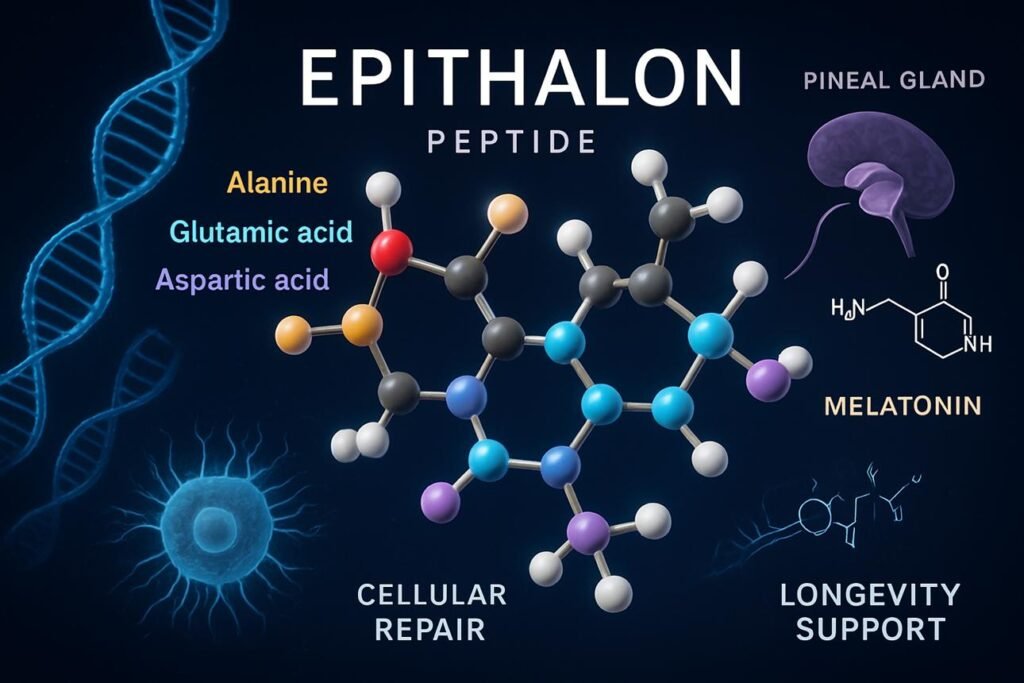
Epitalon
Epitalon is one of the most well-known pineal peptides.
Research explores its potential effects on:
- Circadian rhythms
- Melatonin regulation
- Cellular aging
- Oxidative stress
DSIP
Another peptide often discussed is:
DSIP (Delta Sleep-Inducing Peptide)
Researchers study DSIP because of its potential relationship with:
- Sleep cycles
- Stress response
- Neuroendocrine signaling
However, research remains ongoing.
How Do Sleep Peptides Work?
Scientists continue investigating:
Neurotransmitter Systems
Sleep peptides may interact with:
- GABA pathways
- Serotonin pathways
- Dopamine systems
Hormonal Signaling
Researchers study connections with:
- Melatonin
- Cortisol
- Growth hormone
- Circadian hormones
Cellular Communication
Peptides are signaling molecules.
They may:
- Bind to receptors
- Influence gene expression
- Modify cellular responses
Pineal Peptide for Sleep: Current Research
Research on pineal peptides continues to expand.
Scientists are investigating:
Melatonin Regulation
Studies examine:
- Pineal gland activity
- Hormonal rhythms
- Sleep timing
Cognitive Function
Researchers explore:
- Memory
- Brain aging
- Neuroplasticity
Healthy Aging
Pineal peptides are also studied for:
- Cellular longevity
- Oxidative stress
- DNA protection
Sleep Peptides vs Traditional Sleep Supplements
Many people compare:
Sleep Peptides
With:
Traditional Sleep Supplements
Differences may include:
Mechanism of Action
Sleep supplements often contain:
- Melatonin
- Magnesium
- Herbal extracts
Peptides work differently.
Researchers study:
- Cellular signaling
- Receptor interactions
- Hormonal pathways
Scientific Interest
Peptides are attracting attention because of:
- Precision targeting
- Biological specificity
- Novel mechanisms
Potential Benefits of Peptides for Sleep
Researchers are interested in:
Improved Sleep Quality
Studies explore:
- Sleep onset
- Sleep maintenance
- Sleep efficiency
Circadian Rhythm Support
Researchers investigate:
- Sleep timing
- Melatonin rhythms
- Biological clocks
Recovery and Restoration
Sleep peptides may influence:
- Tissue repair
- Brain recovery
- Hormonal balance
Cognitive Health
Scientists are examining:
- Memory
- Focus
- Neuroprotection
Are Peptides for Sleep Safe?
Researchers emphasize:
Product Quality Matters
Choose products with:
- Laboratory testing
- High purity
- Certificates of Analysis
Storage Matters
Follow:
- Storage instructions
- Temperature recommendations
- Reconstitution guidelines
More Research Is Needed
Sleep peptides remain an active area of scientific investigation.
Researchers continue studying:
- Safety
- Mechanisms
- Long-term effects
How Should Sleep Peptides Be Stored?
Storage recommendations vary.
General guidelines include:
Refrigeration
Many peptides are stored:
- In cool environments
- Away from heat
Protection From Light
Store:
- In original packaging
- Away from sunlight
Dry Conditions
Keep:
- Containers sealed
- Moisture away
- Storage areas clean
Why Researchers Choose Peptides Lab
Researchers interested in peptides for sleep often look for:
- Educational resources
- High purity products
- Storage guides
- Peptide calculators
- Transparent information
Peptides Lab provides:
- Research peptide articles
- Educational guides
- Storage recommendations
- Reconstitution tutorials
- Peptide calculators
Explore more at:
Frequently Asked Questions
What are peptides for sleep?
Peptides for sleep are peptides studied for their potential roles in sleep regulation, circadian rhythms, recovery, and brain health.
What is a pineal peptide for sleep?
A pineal peptide is a peptide associated with the pineal gland and researched for its relationship with melatonin production and circadian rhythms.
Which peptides are most commonly researched for sleep?
Commonly discussed peptides include:
- Pinealon
- Epitalon
- DSIP
Are sleep peptides the same as melatonin?
No.
Melatonin is a hormone.
Sleep peptides are amino acid chains that may interact with different biological systems.
Can peptides improve sleep quality?
Researchers are actively studying whether certain peptides influence sleep quality and circadian rhythms.
Why are pineal peptides becoming popular?
Interest is growing because researchers are exploring their roles in:
- Sleep regulation
- Brain health
- Circadian rhythms
- Healthy aging
Conclusion
Peptides for sleep represent one of the most exciting areas of peptide research.
Scientists continue investigating:
- Pineal peptide for sleep
- Sleep peptides
- Circadian rhythm regulation
- Brain health
- Recovery and restoration
As our understanding of sleep biology advances, peptides may offer new insights into how the body regulates rest, recovery, and overall wellness.
For more peptide guides, educational resources, and research articles, visit Peptides Lab and explore our growing peptide knowledge base.
