
BLOG
CJC-1295/Ipamorelin Storage Temperature: Complete Guide to Refrigeration, Shelf Life & Reconstitution
If you’re using CJC-1295 and Ipamorelin for research purposes, one of the most important questions is: What is the ideal CJC-1295/Ipamorelin storage temperature?
Improper storage can reduce peptide stability, shorten shelf life, and compromise the integrity of your research material. Whether you’re storing lyophilized powder or a reconstituted solution, understanding the right temperature and handling procedures is essential.
At Peptides Lab, we regularly receive questions such as:
- Do peptides have to be refrigerated?
- What is the CJC 1295 Ipamorelin shelf life after reconstitution?
- Does reconstitution solution need to be refrigerated?
- Can peptides be stored at room temperature?
This comprehensive guide answers all of these questions and provides best practices for preserving peptide stability.
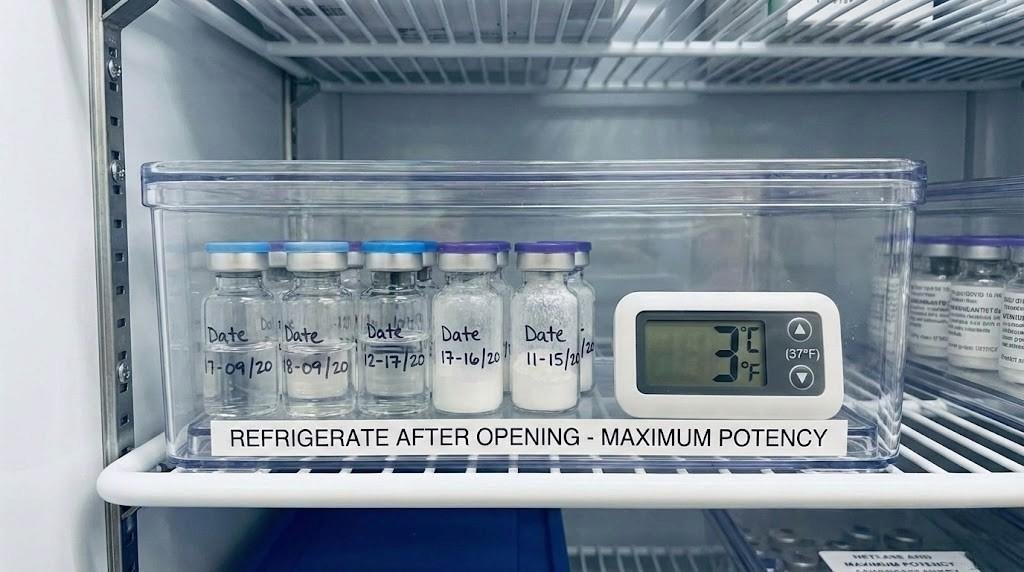
Featured Snippet: What Is the Ideal CJC-1295/Ipamorelin Storage Temperature?
The recommended storage temperature for reconstituted CJC-1295 and Ipamorelin is 2°C to 8°C (36°F to 46°F), which is standard refrigerator temperature. Lyophilized (freeze-dried) peptides are more stable and can often be stored for weeks at room temperature, but refrigeration or freezing is preferred for long-term storage.
What Is CJC-1295 and Ipamorelin?
CJC-1295 is a growth hormone releasing hormone (GHRH) analog, while Ipamorelin is a selective growth hormone secretagogue. They are frequently combined in research because of their complementary mechanisms.
The combination is typically supplied as a lyophilized powder that requires reconstitution using bacteriostatic water or sterile water before use.
Because peptides are sensitive biological molecules, temperature, moisture, and light can all affect their stability and potency over time.
Do Peptides Have to Be Refrigerated?
This is one of the most searched questions among peptide users.
The answer depends on whether the peptide is:
1. Lyophilized (Dry Powder)
Lyophilized CJC-1295 and Ipamorelin are relatively stable.
- Room temperature: acceptable for short periods
- Refrigerator (2–8°C): preferred
- Freezer (-20°C): ideal for long-term storage
Properly stored dry peptides may remain stable for many months and sometimes years depending on manufacturer specifications.
2. Reconstituted (Mixed With Water)
Once mixed, peptides become significantly more fragile.
Reconstituted CJC-1295 and Ipamorelin should:
- Be refrigerated immediately
- Remain between 2°C and 8°C
- Be protected from light
- Avoid repeated temperature changes
Research sources consistently recommend refrigeration after reconstitution to preserve stability and reduce degradation.
CJC-1295/Ipamorelin Storage Temperature Chart
| Storage Condition | Temperature | Recommended? |
|---|---|---|
| Room Temperature | 20-25°C | Short-term only |
| Refrigerator | 2-8°C | Yes |
| Freezer | -20°C | Best for dry powder |
| Reconstituted + Room Temp | 20-25°C | Not recommended |
| Reconstituted + Refrigerator | 2-8°C | Strongly recommended |
Research guides generally agree that 2-8°C is the preferred storage range after reconstitution.
CJC 1295 Ipamorelin Shelf Life After Reconstitution
The shelf life of peptides changes dramatically after adding liquid.
Standard Shelf Life
For CJC-1295:
- Standard shelf life: 28–30 days refrigerated
- Maximum range: 35–40 days
- Potency may decrease over time
For Ipamorelin:
- Standard shelf life: 28–30 days refrigerated
- Maximum recommended use: about 35 days
Many peptide storage references recommend following the 28-day rule for optimal stability.
Why Does Shelf Life Decrease?
Once water is introduced:
- Hydrolysis begins
- Oxidation increases
- Microbial contamination becomes possible
- Temperature sensitivity rises
This is why refrigeration becomes essential after mixing.
Does Reconstitution Solution Need to Be Refrigerated?
Another frequently asked question is:
Does reconstitution solution need to be refrigerated?
The answer depends on the solution.
Bacteriostatic Water
Bacteriostatic water contains benzyl alcohol, which inhibits bacterial growth.
It may be stored:
- At room temperature below 25°C
- In the refrigerator
- Away from sunlight and heat
Refrigeration is optional but can help maintain stability, especially in warmer climates.
Sterile Water
Sterile water contains no preservative.
Once opened:
- Refrigeration is recommended
- Shelf life is shorter
- Use should be prompt after opening
How Long Does CJC-1295 Last After Mixing?
Most research suppliers recommend:
- 14–28 days for maximum potency
- Up to 30 days when refrigerated properly
- Immediate refrigeration after mixing
Storage outside the refrigerator for extended periods may reduce effectiveness.
Even short exposures to elevated temperatures can gradually reduce peptide activity.
What Happens If Peptides Are Stored at Room Temperature?
Room temperature storage is one of the biggest mistakes researchers make.
Possible consequences include:
1. Reduced Potency
Heat accelerates chemical breakdown.
The peptide may appear normal but have reduced biological activity.
2. Oxidation
Oxygen exposure increases oxidation rates, especially in liquid form.
3. Contamination Risk
Without refrigeration, microbial growth becomes more likely.
4. Shorter Shelf Life
A peptide that could last weeks refrigerated may degrade within days under poor storage conditions.
Studies and research suppliers repeatedly emphasize refrigeration to prevent these issues.
Can You Freeze CJC-1295 or Ipamorelin?
Lyophilized Powder
Yes.
Freezing dry peptides is generally considered the best long-term storage method.
Benefits include:
- Longer shelf life
- Better stability
- Reduced degradation
Recommended temperature:
-20°C or lower
Reconstituted Peptides
Generally, avoid freezing.
Freeze-thaw cycles can:
- Damage peptide chains
- Cause aggregation
- Reduce potency
Several peptide storage guides advise against freezing peptides after reconstitution.
How to Store Reconstituted Peptides Correctly
Follow these best practices:
Store Between 2°C and 8°C
Always keep reconstituted peptides refrigerated.
Protect From Light
Use:
- Amber vials
- Original packaging
- Dark containers
Avoid Shaking
Never shake aggressively.
Instead:
- Swirl gently
- Allow the powder to dissolve naturally
Label Every Vial
Include:
- Reconstitution date
- Concentration
- Expiration date
Use Sterile Technique
Always:
- Clean vial tops
- Use sterile syringes
- Avoid repeated contamination
Signs Your CJC-1295 or Ipamorelin Has Gone Bad
Discard the peptide if you notice:
- Cloudy appearance
- Color change
- Floating particles
- Unusual odor
- Crystallization
- Visible contamination
If in doubt, discard the vial and start with a fresh preparation.
Frequently Asked Questions
What is the best CJC-1295/Ipamorelin storage temperature?
The ideal temperature is 2°C to 8°C (36°F to 46°F) after reconstitution.
Do peptides have to be refrigerated?
Dry peptides may tolerate room temperature temporarily, but reconstituted peptides should be refrigerated.
What is the CJC 1295 Ipamorelin shelf life after reconstitution?
Most sources recommend 28 to 30 days when stored at 2–8°C.
Does reconstitution solution need to be refrigerated?
Bacteriostatic water may be stored at room temperature below 25°C, although refrigeration can improve stability.
Can I freeze reconstituted CJC-1295?
Generally, no. Freeze-thaw cycles may reduce peptide stability and potency.
Final Thoughts
Understanding the correct CJC-1295/Ipamorelin storage temperature is essential for preserving peptide integrity.
The key points are simple:
- Store dry peptides in a cool, dry place or freezer.
- Refrigerate reconstituted peptides at 2–8°C.
- Follow the 28-day shelf life rule after reconstitution.
- Protect peptides from heat, moisture, and direct light.
- Use bacteriostatic water when appropriate and maintain sterile handling procedures.
By following these guidelines, researchers can maximize peptide stability and minimize degradation during storage.
For premium research peptides, peptide calculators, and educational resources, visit Peptides Lab at https://peptideslab.online/.
References
- Refrigerated reconstituted peptide stability and CJC-1295/Ipamorelin shelf life.
- Peptide refrigeration and stability overview.
- CJC-1295 reconstitution and storage protocols.
- Temperature effects on peptide stability.
- BAC water storage recommendations.
- Peptide storage and refrigeration guide.
