
BLOG
Can You Reconstitute Peptides With Saline? Complete Guide to Peptide Reconstitution
Introduction
One of the most common questions asked by peptide researchers is:
Can you reconstitute peptides with saline?
The answer depends on the peptide, the intended use, and the storage conditions after mixing.
When learning about peptide preparation, researchers often encounter several terms including:
- Bacteriostatic water for peptides
- Saline solution
- Sterile water
- Reconstitution solution
- Mixing BAC water with peptides
Understanding the differences between these solutions is important because reconstitution affects:
- Peptide stability
- Storage life
- Concentration
- Long-term quality
In this guide from Peptides Lab, you’ll learn:
- Can you reconstitute peptides with saline?
- Is bacteriostatic water and reconstitution solution the same?
- How much BAC water to mix 10mg peptides?
- How to mix BPC 157 with bacteriostatic water
- Best storage practices after reconstitution
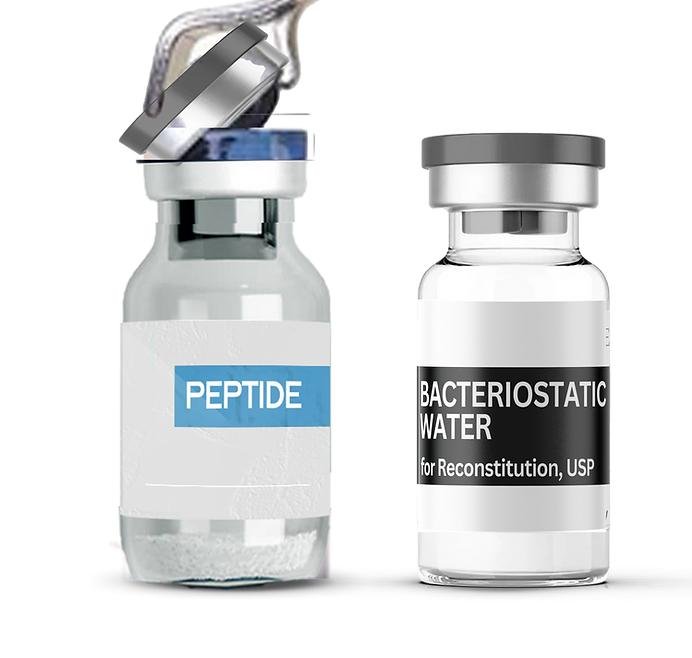
Featured Snippet: Can You Reconstitute Peptides With Saline?
Yes, some peptides can be reconstituted with sterile saline solution. However, many researchers prefer bacteriostatic water for peptides because it contains a preservative that helps inhibit bacterial growth and may improve storage stability after reconstitution. The ideal reconstitution solution depends on the specific peptide and supplier recommendations.
What Does Peptide Reconstitution Mean?
Peptide reconstitution is the process of mixing a freeze-dried (lyophilized) peptide powder with a sterile liquid.
The goal is to:
- Dissolve the powder
- Create the desired concentration
- Preserve peptide stability
- Prepare the peptide for research applications
Most peptides are shipped as powders because they are more stable in dry form.
Why Are Peptides Sold as Lyophilized Powder?
Peptides are sensitive molecules.
Freeze-drying helps:
Improve Shelf Life
Dry peptides remain stable for longer periods.
Simplify Transportation
Powders tolerate transportation better than liquids.
Reduce Chemical Degradation
Removing water slows:
- Hydrolysis
- Oxidation
- Microbial growth
Can You Reconstitute Peptides With Saline?
The short answer is:
Yes, saline can be used for some peptides.
However, several factors should be considered.
Type of Peptide
Different peptides have different stability profiles.
Some peptides:
- Are compatible with saline
- Prefer bacteriostatic water
- Require manufacturer-specific diluents
Storage Duration
If the peptide will be used immediately, saline may be acceptable in some research settings.
For longer storage, many researchers choose:
- Bacteriostatic water
- Refrigeration
- Proper sterile handling
Supplier Recommendations
Always check:
- Product instructions
- Storage recommendations
- Certificate of analysis
- Manufacturer guidelines
What Is Bacteriostatic Water for Peptides?
One of the most popular reconstitution solutions is:
Bacteriostatic Water
Bacteriostatic water is sterile water that contains:
- 0.9% benzyl alcohol
- Antimicrobial preservative
Benefits include:
Reduced Bacterial Growth
The preservative helps inhibit microbial contamination.
Extended Usability
Researchers often prefer bacteriostatic water because it can be used multiple times under sterile conditions.
Convenient Storage
It is commonly used for:
- Peptide reconstitution
- Multi-use vials
- Long-term research storage
Is Bacteriostatic Water and Reconstitution Solution the Same?
This is a very common question.
Is bacteriostatic water and reconstitution solution the same?
Not exactly.
Reconstitution solution is a broad term.
It may include:
- Bacteriostatic water
- Sterile water
- Saline solution
- Other manufacturer-approved diluents
Bacteriostatic water is one type of reconstitution solution.
Is Bacteriostatic Water the Same as Reconstitution Solution?
Again:
No.
Bacteriostatic water is:
- A specific product
- Sterile water with preservative
Reconstitution solution is:
- A general category
- Any sterile liquid used to dissolve peptides
Saline vs Bacteriostatic Water
Researchers frequently compare:
Saline
Contains:
- Sodium chloride
- Sterile water
Benefits:
- Widely available
- Compatible with some peptides
Limitations:
- Usually no preservative
- Shorter shelf life after opening
Bacteriostatic Water
Contains:
- Sterile water
- Benzyl alcohol
Benefits:
- Preservative included
- Reduced contamination risk
- Commonly used in peptide research
Mixing BAC Water With Peptides
Many researchers ask:
Mixing BAC Water With Peptides: What’s the Process?
General steps include:
- Wash hands thoroughly.
- Disinfect vial tops.
- Draw bacteriostatic water using a sterile syringe.
- Inject slowly along the vial wall.
- Allow the powder to dissolve naturally.
- Refrigerate according to storage instructions.
Avoid:
- Shaking aggressively
- Using hot water
- Contaminating needles
Bacteriostatic Water Reconstitution Guide
When using bacteriostatic water:
Inject Slowly
Rapid injection may:
- Create foam
- Disturb the peptide
- Reduce stability
Swirl Gently
Never shake aggressively.
Instead:
- Rotate the vial slowly
- Swirl gently
Refrigerate After Mixing
Many peptides are stored:
- Between 2°C and 8°C
- Away from sunlight
- In original containers
How to Mix BPC 157 With Bacteriostatic Water
Another common search query is:
How to Mix BPC 157 With Bacteriostatic Water
The general process includes:
- Clean vial tops.
- Draw bacteriostatic water.
- Slowly inject against the vial wall.
- Allow the powder to dissolve.
- Store according to supplier instructions.
BPC 157 is often sold as:
- 5mg lyophilized vials
- 10mg lyophilized vials
The amount of liquid added depends on the concentration desired.
How Much BAC Water to Mix 10mg Peptides?
This question appears frequently:
How Much BAC Water to Mix 10mg Peptides?
There is no universal answer.
Researchers may choose different volumes based on:
- Desired concentration
- Ease of measurement
- Research protocols
- Peptide type
Common mixing volumes include:
- 1 mL
- 2 mL
- 2.5 mL
- 5 mL
The correct choice depends on the intended concentration and research goals.
How to Store Reconstituted Peptides
Storage is just as important as mixing.
Refrigerate
Many reconstituted peptides are stored at:
2°C to 8°C
This helps:
- Preserve stability
- Reduce degradation
- Extend shelf life
Protect From Light
Store peptides:
- In dark environments
- Inside original packaging
- Away from sunlight
Avoid Temperature Fluctuations
Frequent warming and cooling may affect:
- Potency
- Stability
- Shelf life
Common Peptide Reconstitution Mistakes
Shaking the Vial
Avoid:
- Vigorous shaking
- Excessive agitation
This may damage delicate peptide structures.
Using Unsterile Equipment
Always:
- Use sterile syringes
- Clean vial tops
- Maintain a clean workspace
Ignoring Storage Recommendations
Improper storage may reduce:
- Stability
- Consistency
- Shelf life
Frequently Asked Questions
Can you reconstitute peptides with saline?
Yes, some peptides may be reconstituted with saline. However, bacteriostatic water is often preferred for its preservative properties.
What is bacteriostatic water for peptides?
It is sterile water containing benzyl alcohol, which helps inhibit bacterial growth.
Is bacteriostatic water and reconstitution solution the same?
No. Bacteriostatic water is one type of reconstitution solution.
Is bacteriostatic water the same as reconstitution solution?
Not exactly. Reconstitution solution is a general term that includes several sterile liquids.
How much BAC water to mix 10mg peptides?
The amount varies depending on the peptide, desired concentration, and research protocol.
How to mix BPC 157 with bacteriostatic water?
Inject bacteriostatic water slowly along the vial wall, allow the powder to dissolve naturally, and store appropriately.
Conclusion
Understanding can you reconstitute peptides with saline is an important part of peptide research.
Researchers should also understand:
- Bacteriostatic water for peptides
- Mixing BAC water with peptides
- Bacteriostatic water reconstitution
- Saline vs bacteriostatic water
- How much BAC water to mix 10mg peptides
- Proper peptide storage techniques
Choosing the right reconstitution solution and following proper handling procedures can help maintain peptide stability and improve consistency.
For peptide guides, calculators, and research resources, visit Peptides Lab and explore our growing peptide knowledge base.
